

Yala National Park with Kids 2026 The Honest Family Safari Guide (Ages, Tips & Everything Parents Actually Need to Know)
The complete honest guide to Yala National Park with children in 2026. What age is right, how to handle the 4 AM alarm, which animals excite kids most, best family lodges, what to pack, and how to make it the best day of your family holiday.
The Question Every Parent Googles Before Booking Yala
You are planning a family holiday in Sri Lanka. Yala National Park is on the list — the leopards, the elephants, the extraordinary wildlife. You have read the blogs. You have seen the photographs. And then you look at your children — five years old, eight years old, or a toddler who has strong opinions about nap time — and you start searching:
"Is Yala National Park good for families?" "What age is appropriate for a Yala safari?" "How do I manage a 4 AM alarm with a six-year-old?" "Will my children actually enjoy this or will it be a disaster?"
Yala National Park is Sri Lanka's beloved wildlife haven, offering families a safe safari experience filled with captivating animal encounters, scenic picnics, and treasured memories for all generations. But that sentence, however true, does not tell you what you actually need to know before you pack the children into a safari jeep at dawn.
This guide does. It is written for parents — with honest answers to the specific, practical questions that other guides skip over.
The First Question: What Age Is Right for a Yala Safari?
This is the most Googled family question about Yala, and the answer is more nuanced than most guides admit.
Under 3: Genuinely Difficult
Toddlers under three face a specific set of challenges on a Yala safari that are worth being honest about. The drives run 3–5 hours on rough, corrugated tracks that generate significant vibration and noise. The midday heat — even with hats and water — is intense for small bodies. And the fundamental requirement of silence at wildlife sightings is genuinely incompatible with the needs of a two-year-old who has decided that right now is the moment for a very loud opinion.
This does not mean a Yala safari with a toddler is impossible. Families do it every week. But it means going in with realistic expectations: the drive may be punctuated by a toddler having needs. The sightings may be shorter. The 4:30 AM alarm may produce consequences that echo through the following day.
A sarong or beach towel can be held to your face or used to loosely cover a sleeping child in a car seat, and can be tied inside the jeep for an impromptu sun shade. For under-threes, a genuinely experienced and patient driver who has worked with young children before is the single most important booking decision.
The honest recommendation: if your child is under two, consider whether Udawalawe National Park — where elephant sightings are near-certain, the terrain is less demanding, and the drives are shorter — might be a better first safari experience. If your child is two to three, a shorter half-day afternoon drive (cooler, later start, no 4 AM alarm) is significantly more manageable than the classic dawn expedition.
Ages 3–5: The Sweet Spot Beginning
Children from around three years old typically have enough capacity for focused attention, delayed gratification, and basic behavioural management to make a Yala safari genuinely rewarding for everyone. The magic of this age is that they have not yet developed the self-consciousness of older children — their wonder at a wild elephant is completely unfiltered and completely real.
Elephants wandering across open plains produce genuine thrills even for the youngest naturalists, and children are thrilled by their gentle majesty.
At this age, manage expectations carefully: the goal is not a leopard. The goal is the total sensory experience — the smell of the dry scrub, the sound of peacocks calling, the first moment a spotted deer appears from behind a bush. Children aged 3–5 who are given this framing consistently rate the safari as the highlight of the trip.
Ages 6–12: The Ideal Safari Age
This is the golden window. Children aged 6–12 have the attention span, the physical endurance, and the processing capacity to truly engage with a wildlife experience. They can use binoculars effectively, understand what the guide is explaining about animal behaviour, identify birds from a field guide, and sit still at a sighting for long enough to watch what the animal actually does rather than simply documenting its existence.
Bird and animal guide books work wonderfully — even tiny children love to find photos of the wildlife they see on the book's pages. For children aged 6–12, bring a field guide to Sri Lanka's mammals and birds and make a game of identification. The child who spots a mongoose and finds it in the book before the guide names it will talk about that moment for months.
The leopard, if you see one, will produce a reaction in a child of this age that you will remember for the rest of your life. Genuine awe has very few witnesses more receptive than a ten-year-old who was not entirely sure it was going to be worth the early alarm.
Teenagers: Genuinely Excellent — With One Condition
Teenagers at Yala can have an extraordinary experience — particularly if they have any interest in wildlife, photography, or the natural world. The sophistication of Yala's ecological complexity, the behavioural richness of the animal encounters, and the photographic opportunity all reward the attention span and analytical capacity that teenagers bring.
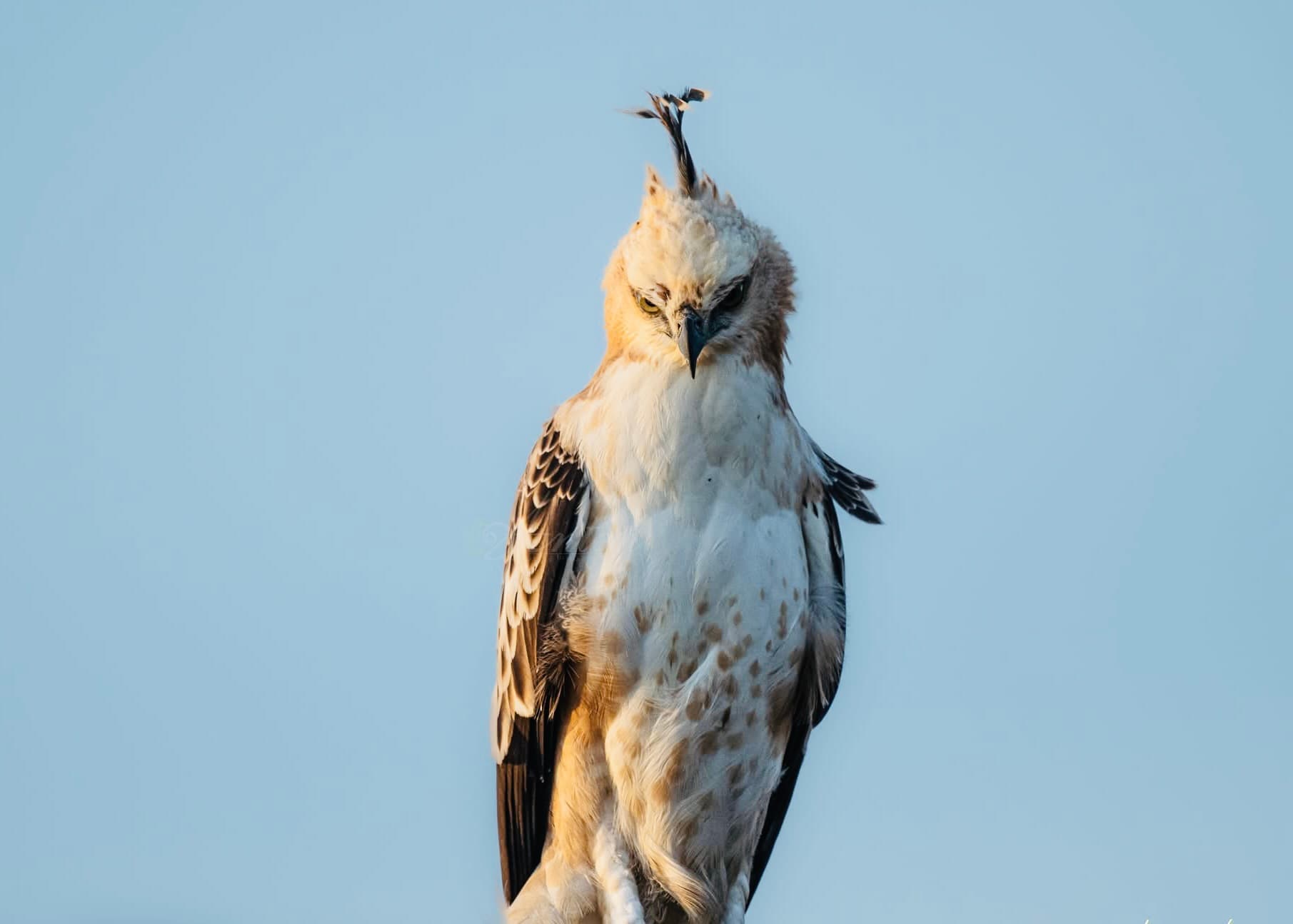
The one condition: manage the 4:30 AM alarm honestly. A teenager who has been told that this is non-negotiable, that the first 90 minutes after gate opening are worth every minute of lost sleep, and who has a specific wildlife goal (the leopard, the sloth bear, the crested serpent eagle) will drag themselves out of bed with something approaching willingness. A teenager who feels the alarm was sprung on them at the last minute will spend the drive demonstrating their unhappiness.
Timing the Safari Around Your Children
The 4:30 AM Question
The morning safari's early start is simultaneously the most valuable and the most logistically challenging element of a Yala visit with children. Morning safaris are perfect for families: the air is cool, animals are more active, and children are fresh and eager for discovery.
Every word of that is true. The challenge is getting there.
The solution: Stay overnight as close to the park gate as possible. If you're doing a morning safari in Yala, try to stay locally the night before to improve your safari experience. If you are staying further away and have to get up in the middle of the night to get to the park for when it opens, you and no doubt the kids will feel so tired and probably not appreciate the experience as much.
A property in the Yala buffer zone — Cinnamon Wild, Leopard Trails, or even a mid-range guesthouse in Tissamaharama — means your 4:30 AM pickup is from a bed you have slept in, not from a car seat you have been slumped in for 2 hours. This single decision transforms the morning safari from an ordeal into an adventure.
Brief your children the evening before. Make it exciting, not obligatory. The child who goes to bed knowing that tomorrow morning they might see a wild leopard at sunrise — and who has chosen their own wildlife goal — is a very different travelling companion at 4:30 AM than the child who was just woken up.
The Afternoon Alternative
For families who genuinely cannot manage the early alarm — toddlers who will be catastrophically tired, children with medical needs that require sleep, or parents whose own sleep deprivation makes dawn starts unsafe — the afternoon safari (2:30–6:00 PM) is a genuinely good alternative.
Leopard sightings are possible in the afternoon — the leopards are actually a bit more active towards late afternoon — and the golden hour light before sunset produces some of the most beautiful wildlife photographs of any visit. Elephant herds moving toward evening water are reliably encountered. The park is quieter in the mid-afternoon before the sunset rush.
The afternoon safari is not the optimal choice for leopard probability, but it is a real safari with real wildlife and the same golden-light magic — just delayed by 12 hours.
The Smartest Family Structure: Afternoon + Morning
The best approach for families with children aged 5 and above: arrive in Tissamaharama at midday, rest through the heat, do the afternoon safari (2:30–6:00 PM) on Day 1, sleep early, and then do the morning safari (6:00–10:00 AM) on Day 2. Two drives, two golden-hour windows, maximum wildlife probability — with one rest between.
This structure eliminates the most brutal version of the early start (the 2 AM alarm from a property 2 hours away) by giving children a full night's sleep in their accommodation before the 4:30 AM pickup. Most families who try this structure describe it as the perfect family safari format.
Which Animals Will Your Children Care About Most?
This matters for setting expectations and framing the drive correctly for young passengers.
Elephants — The Universal Winner
Every child, at every age, responds to elephants. The scale of them. The way calves stay close to their mothers. The sound they make when they are close enough to hear. The spray of water when a herd bathes. Elephants, monkeys, crocodiles and maybe even a leopard or two — this is how to persuade the kids that Sri Lanka is the place to go.
Frame the elephant encounter in advance: tell your children that the Sri Lankan elephant is the largest animal in all of Asia, and that a calf they might see today weighs more than their entire school classroom. At the sighting itself, ask them to count the herd. Ask them to identify the biggest animal. Ask them to watch which way the calf moves in relation to its mother. Give them something active to do with the encounter.
Peacocks — The Unexpected Child Favourite
Consistently underestimated, consistently loved by children. Sri Lanka's national bird is abundant throughout Yala, impossible to miss, and produces a reaction from children — particularly younger ones — that rivals the leopard. The display of a male peacock, tail fully spread, rotating slowly in the track, is genuinely one of the most visually spectacular moments a safari can produce, and it is available on virtually every drive.
Tell your children before entering the park: "The peacock is Sri Lanka's national bird. If you see one spreading its tail, it means it's trying to impress a female peacock." Children will watch peacocks with the focus of documentary filmmakers.
The Spotted Deer — The Alarm Call Game
Teaching your children to listen for the spotted deer's alarm call — a sharp, repeated bark that indicates a predator is nearby — turns a common animal into an active wildlife detective tool. Explain that when the deer bark with their heads up and all facing the same direction, it almost always means a leopard is close.
Children who understand this become intensely focused listeners during the quieter parts of the drive. They will frequently hear the alarm call before the adults do — and the moment they announce it and the guide confirms a leopard sighting minutes later produces a pride that is disproportionate and wonderful.
Crocodiles — The Child Thriller
Mugger crocodiles at Yala's lagoons produce a specific reaction in children aged 5–12 that bypasses the intellectual and goes directly to the visceral. They are enormous, ancient-looking, and unmistakably exciting. Tell your children before the lagoon stop: "The mugger crocodile has been on Earth for 200 million years. It was here when dinosaurs walked the planet."
Watch what happens to their attention.
The Mongoose — The Small Animal Hero
Every family safari has a child who bonds with an unexpected small animal. At Yala, the mongoose is the most common candidate — particularly the ruddy mongoose, which trots along track edges with a focused, purposeful energy that children find irresistible. It is also the animal most likely to be encountered multiple times during a drive, giving children who spotted it first a recurring moment of recognition and pride.
The Leopard — Manage Expectations Honestly
Communicate with your driver — you are the boss of your safari. Dying to see a leopard and don't mind sitting in a queue of jeeps to do so? Tell him. Prefer a chilled out experience checking out birds and small mammals without getting near other jeeps? Let him know.
For children's sake, frame the leopard correctly before the drive: "Leopards are the world's most secretive big cat. We might see one — more people see a leopard at Yala than anywhere else on Earth — but the leopard decides when it wants to be seen. Our job is to look carefully and be quiet."
This framing transforms the leopard encounter from a guaranteed performance into a shared hunt — which is both more honest and more exciting for children. The family that hunts together, and finds, celebrates together.
What to Pack for a Family Safari at Yala
The adult packing list applies to everyone. The children-specific additions:
Snacks — More Than You Think
Snacks, snacks and more snacks — pre-cut fruit, crackers, yogurts. We never seem to have enough snacks with us on the trip. Make sure to also bring a bag for garbage.
The midday rest area inside Yala sells limited food at elevated prices. Bring a cool bag with more snacks than you think any human child could possibly consume between 6 AM and noon. You will use all of them.
A Wildlife Field Guide
Bird and animal guide books work wonderfully — even tiny children love to find photos of the wildlife they see on the pages. A Sri Lanka mammals and birds field guide purchased before the trip gives children an active role in the safari. Choose one with clear photographs rather than illustrations, and tabs or page markers for the most likely sightings.
Binoculars — Child-Sized
Full-size 10×42 binoculars are heavy and difficult for small hands to hold steady. A lightweight 8×21 compact binocular — available for USD 20–40 — gives children under 10 the ability to spot and track animals independently, which transforms their engagement with the drive. This is the single most underrated child-specific purchase for a Yala safari.
A Small Notebook
For the child who likes to record things. A wildlife sighting log — date, time, species, behaviour, number of animals — keeps children engaged during the quieter sections of the drive and produces a keepsake that most families still have years later. Ask your guide to help fill in the behaviour column.
Sunscreen SPF 50+ Applied Before Departure
Apply 30 minutes before the 4:30 AM jeep pickup. Children's sun protection needs to be in place before the gate opens at 6 AM, when the sun begins to angle into open jeeps. Reapply at the midday rest stop. The equatorial UV index at Yala in the dry season is extreme — children burn faster than adults in this environment.
A Thin Fleece or Light Jacket
The pre-dawn air at Yala in the dry season is genuinely cool — particularly in February and March. Children dressed only for daytime temperatures will be uncomfortable until the sun rises. A packable fleece that fits in the bottom of the daypack adds negligible weight and significant morning comfort.
Emergency Screen Device (The Secret Weapon)
Full disclosure, we do bring an emergency iPad and headphones just in case. Most of the time it stays hidden away but it has saved us from a loud and cranky toddler more than once.
There is no shame in this. The screen stays hidden until it is genuinely needed. Its mere existence as a safety net removes the anxiety of the prolonged quiet stretch and allows the rest of the family to focus on the drive rather than managing impending toddler meltdown.
Choosing the Right Lodge for a Family with Children
Accommodation choice for a family at Yala has different criteria than for couples or solo travellers.
The Pool Imperative
The midday rest period (10 AM–2 PM) is the family safari's most logistically demanding window. With children who have been awake since 4:30 AM, have completed a full morning drive, and are now hot, hungry, and wound up on wildlife adrenaline — a pool is not a luxury. It is a necessity.
Cinnamon Wild has rooms with balconies and views of the jungle or the sea — and a proper swimming pool that serves as the primary family recharge station during the midday break. The pool at Cinnamon Wild is the best-positioned for families in the mid-range tier: large, clean, shaded, and with the jungle visible beyond the pool edge.
At the budget tier, several Tissamaharama guesthouses have small pools — confirm this specifically when booking.
Kid-Friendly Lodges at Each Tier
Luxury with children: Leopard Trails is the most explicitly family-oriented luxury property near Yala — the luxury tents are more spacious and accommodate families comfortably. Cinnamon Wild's bungalow options at the lodge edge are suitable for families who want separate sleeping areas. Note that Chena Huts is specifically described by operators as best suited to adults — the plunge-pool format and intimate scale make it less practical for families with young children.
Mid-range with children: Cinnamon Wild Yala is the clearest recommendation — pool, restaurant, buffer zone wildlife (elephants in the grounds at dusk), and professional safari coordination from the property's desk. Jetwing Yala is an excellent chain hotel right by the coast and has the organised infrastructure — restaurant options, beach access, pool — that families with younger children particularly value.
Budget with children: LakeSide Cabana Tissamaharama offers rustic treehouse-style cabins with a children's playground — the playground being a specific and often underrated benefit for families with children who need to run off energy between safari drives.
The Safari Briefing Your Children Need the Night Before
This is the most underused tool in family safari preparation. The 10-minute conversation the evening before the drive that frames the experience correctly transforms the next morning.
What to cover:
Why we're waking up so early: "The leopard is most active in the first hour after sunrise. If we're not at the gate at 6 AM, we miss the best window. The animals are waiting for us."
What silence means: "At a sighting, we need to stay completely quiet. The animals' hearing is much better than ours. If we make noise, they disappear. The quieter we are, the longer we get to watch."
What we're looking for: Let each child choose one specific animal to focus on. The leopard. The sloth bear. The painted stork. The mongoose. Having a personal goal transforms passive observation into active hunting.
What might happen: "We might see a leopard. We might not. The park decides, not us. But whatever we see — the elephants, the peacocks, the crocodiles — will be unlike anything you've ever seen outside a zoo. And this time, they're free."
What the drive feels like: Bumpy. Dusty. Sometimes slow. Sometimes suddenly very exciting. Sometimes a 20-minute wait in silence that is broken by an elephant appearing from nowhere. That contrast — between the waiting and the moment — is what makes it a real experience rather than a performance.
The Udawalawe Alternative: When Yala Is Too Much
For families with children under five, or with children who have sensory sensitivities that make the unpredictability and intensity of a Yala morning drive genuinely difficult, Udawalawe National Park is the superior alternative.
Udawalawe is one of the best parks for families with children. The almost-guaranteed elephant sightings keep kids engaged, and children under 6 enter free. The open terrain means wildlife is easier to spot than in dense jungle parks.
At Udawalawe, elephant sightings are near-certain on any drive. The open grassland setting makes spotting effortless — there are no long periods of scanning dense scrub while children grow restless. The drives are shorter and less rough than Yala. The adjacent Elephant Transit Home — where orphaned calves are fed milk at set times — is one of the most reliably delightful child-friendly wildlife experiences in all of Asia.
For families visiting Sri Lanka with mixed-age children — say, a two-year-old and a nine-year-old — the optimal structure is often: Udawalawe for the guaranteed elephants and toddler-friendly experience, then a half-day Yala drive for the older child's leopard ambition.
What Actually Happens on the Day: A Real Family Safari Timeline
Based on real family accounts from 2025 and 2026 visits to Yala:
4:30 AM: Jeep arrives. Nobody wants to be awake. The seven-year-old is wearing her shoes on the wrong feet. The nine-year-old is already asking if there will be a leopard in the first five minutes.
5:15 AM: At the gate. It is dark and cool and surprisingly beautiful — the sky just beginning to shift from black to dark blue. Other jeeps are queuing. The driver is checking the radio. A small child has fallen asleep against your shoulder.
6:00 AM: The gate opens. You are moving. The sleeping child wakes up because the jeep started moving. Nobody is tired anymore.
6:15 AM: First sighting — a herd of spotted deer, backlit by the rising sun, watching the jeep from 40 metres. The nine-year-old identifies them from the field guide. A tick in the notebook.
6:40 AM: A peacock crosses the track directly in front of the jeep, fully spread. The seven-year-old has never made a sound like the one she makes right now. The driver cuts the engine. The peacock performs for four minutes and nobody breathes.
7:15 AM: Waterholes. Three mugger crocodiles on the bank. The nine-year-old whispers "200 million years" to his sister, something he heard from the driver earlier and has already made his own. She looks at the crocodile differently.
8:00 AM: The radio. The driver listens, makes a decision, and drives. Three minutes later, you understand why. A female leopard, on a granite boulder 25 metres from the track, looking directly at your jeep with complete indifference. The seven-year-old does not make a sound. She sits perfectly still, binoculars raised, for six minutes. The nine-year-old is crying very quietly. You are also crying very quietly.
8:07 AM: The leopard descends the rock and vanishes into the scrub.
8:08 AM: The seven-year-old turns to you and says: "Can we come back tomorrow?"
Frequently Asked Family Questions
Q: Is Yala National Park safe for children? Safaris with family-certified operators feature seat-belted safari vehicles, child-appropriate safety briefings, and guides with emergency training. The safari jeep provides complete protection from all wildlife. Children are never required to leave the vehicle during the drive. Yala is safe for children of all ages when accompanied by a licensed operator.
Q: What is the minimum age for a Yala safari? There is no official minimum age enforced at the park gate. The practical minimum, based on real family experience, is approximately two to three years old for a short afternoon drive, and five to six years old for a full morning drive. Younger children can participate but require additional planning and realistic expectations from parents.
Q: Do children get free entry to Yala? Children aged 5 and under enter free. Children aged 6–12 pay a reduced foreign visitor rate (approximately half the adult fee). Verify current rates with your operator before arrival, as fees are periodically adjusted.
Q: How long is the safari drive? A standard half-day safari runs 3–4 hours. A full-day safari covers approximately 6–7 hours with a midday break at the park's rest area. For families with young children, the half-day morning drive (6 AM–10 AM) is typically the recommended option.
Q: Which is better for families — Yala or Udawalawe? Udawalawe is one of the best parks for families with children thanks to almost-guaranteed elephant sightings and open terrain that makes wildlife easy to spot. Yala offers the leopard possibility and greater biodiversity but requires more from children in terms of patience and early starts. For children under 5, Udawalawe is often the better choice. For children aged 6 and above who are excited about the leopard, Yala is worth it.
Q: Can I bring a baby carrier or pram to Yala? A baby carrier is useful for the very brief walking sections at Sithulpawwa temple or the park's rest area. A pram or stroller is completely impractical on the rough jeep tracks and would not fit in the vehicle. For infants and babies, a structured front or back carrier is the correct choice.
The Memory That Lasts Longest
Parents who have taken children to Yala consistently describe the same phenomenon: the animal their child talks about for months afterward is almost never the leopard. It is the peacock. Or the mongoose they spotted before the driver did. Or the crocodile that slid into the water exactly as they were watching. Or the elephant calf that wandered to within five metres of the jeep while its mother browsed a bush.
The leopard, if you see one, will of course be unforgettable. But the experience of a child who has been an active participant in a real wildlife encounter — not a spectator at a zoo, not a viewer of a screen — changes something in them. The natural world becomes real in a way it was not before.
Imagine the thrill of hearing your child's gasp at spotting a wild elephant, or sharing quiet awe as a family in the presence of a graceful leopard. It's an experience the whole family will remember forever.
Go. Take the children. Set the alarm.
The park is waiting.
Last updated: May 2026 | Age guidance, lodge recommendations, and practical family tips verified against current 2026 conditions, real parent accounts, and family safari operator information from Yala National Park, Sri Lanka.
Ready to see this in real life?
Book your Yala safari today and experience the magic firsthand.
Explore Packages