

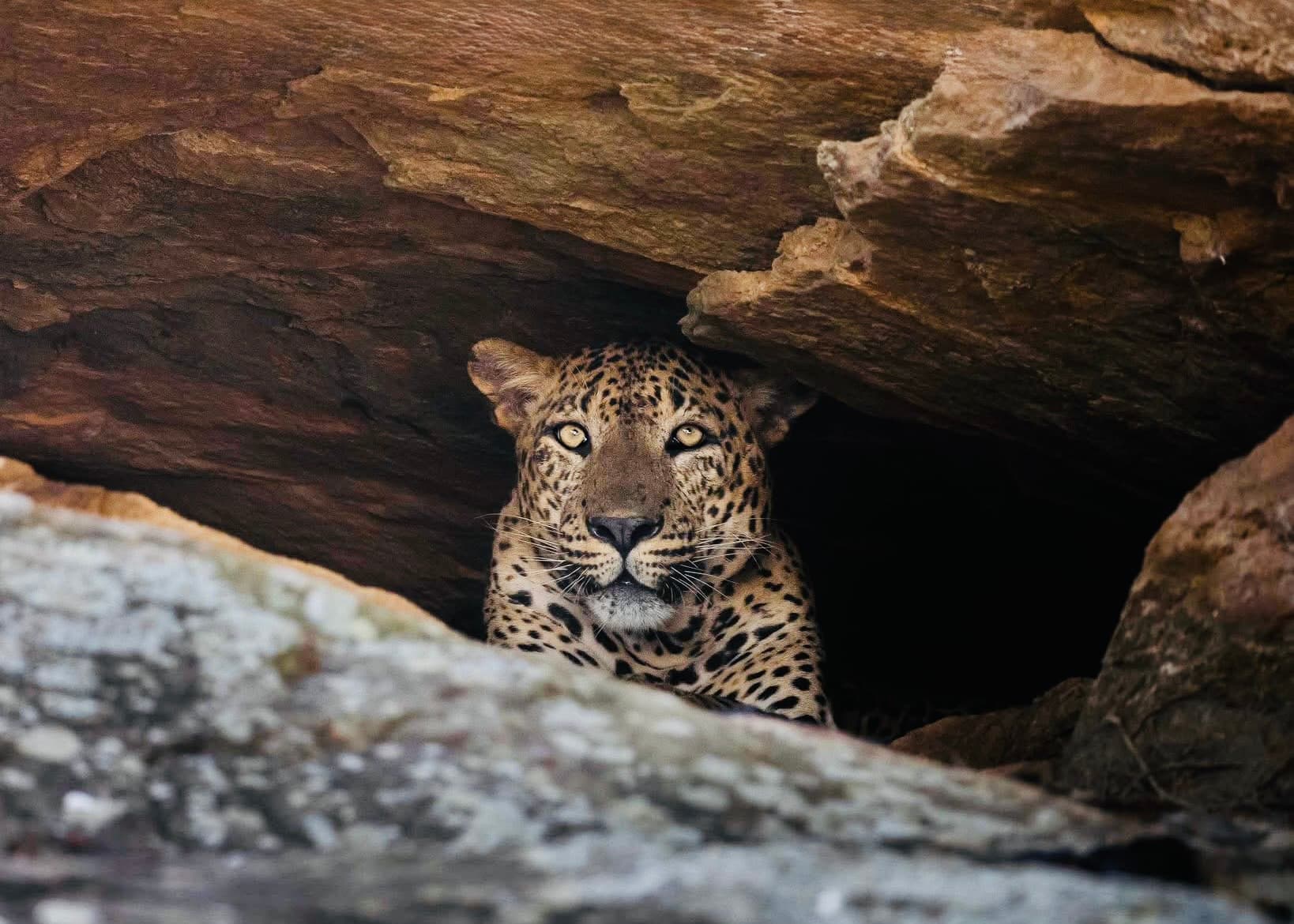
Wildlife Myths vs Reality 2026 | What Travel Blogs Get Wrong (The Honest Truth)
Yala National Park Myths vs Reality 2026 What Travel Blogs Get Wrong (The Honest Truth)
The honest truth about Yala National Park in 2026 what typical travel blogs get wrong, what the marketing doesn't tell you, and the real experience you should expect. Myths debunked with real data.
The Gap Between What Travel Blogs Claim and What Actually Happens
You have read six different Yala National Park guides. You have watched YouTube videos of leopards on granite boulders. You have seen the Instagram photographs of safari vehicles in golden light. You have read testimonials saying "it was the most extraordinary morning of my life."
Now you are wondering: Is this real? Or is this marketing?
The answer is: both. The extraordinary experiences at Yala are real. The leopard encounters, the elephant herds, the golden-hour light — these things genuinely happen. But the way travel guides present Yala is often missing crucial context. They celebrate the leopard without explaining the 40-jeep convoy around it. They praise the pristine wilderness while minimizing the tourist infrastructure. They show the best-case scenario without discussing the 40% of visitors who don't see a leopard on their single drive.
This guide separates Yala's real truth from the marketing narrative. The myths that travel blogs perpetuate. The reality that first-time visitors actually encounter. The specific gap between expectation and experience that causes the most frustration.
Myth #1: "Yala is a pristine wildlife experience in unspoiled wilderness"
What travel blogs claim: "Yala National Park remains one of the last untouched wildernesses of Sri Lanka. You will experience nature in its purest form, far from the noise of civilization."
The reality: Yala is not unspoiled wilderness. It is a managed wildlife reserve with 300–400 vehicles entering daily during peak season. The "pristine" experience most blogs describe is Block 5 in May–June, not Block 1 in February. In peak season, you are as likely to spend your drive looking at the back of a Toyota Hilux as you are watching wildlife.
The radio network effect means 30–50 jeeps can converge on a single leopard sighting within 10 minutes. The diesel engines create visible dust clouds. Drivers communicate via radio, creating constant background chatter. The wilderness feeling depends entirely on which block you choose, which season you visit, and what time you arrive at the gate.
The honest version: Yala is a world-class leopard-viewing destination in a beautiful landscape, but it is not remote wilderness. It is a controlled, busy, vehicle-dependent safari experience. Expect crowds in peak season. Expect engines. Expect the radio network. If solitude is your priority, choose Block 5 and May–June, not Block 1 and February.
Myth #2: "You have a 60–90% chance of seeing a leopard"
What travel blogs claim: "Yala National Park offers a 60–90% probability of seeing a leopard per drive, the highest in the world."
The reality (and why it's misleading): The "60–90% probability" is real, but it is wildly misinterpreted. Here is what that statistic actually means:
* 60% probability = in 100 individual drives, approximately 60 see a leopard
* This also means: 40% see NO leopard
* The probability assumes optimal conditions (dry season, early morning, Block 1, 2 drives, experienced guide)
* With only one drive or suboptimal timing, the probability drops to 40–50%
* A single drive at 2:00 PM from Galle has approximately 30% probability, not 90%
Travel blogs often quote the 90% number without explaining the conditions required to achieve it. The fine print: you need two drives, the dry season, Block 1, proper timing, and an experienced guide. Many visitors do one drive and are surprised when they don't see a leopard.
The honest version: You have approximately a 50–70% chance of seeing a leopard on a single properly-planned morning drive in the dry season. Two drives increases this to 80–90%. A single afternoon drive drops this to 30–40%. These probabilities are among the highest in the world, but they are not guarantees. Plan your emotions accordingly.
Myth #3: "The jeep jam is exaggerated — it's not really that bad"
What travel blogs claim: "While Yala does get busy in peak season, the 'jeep jam' issue is often overstated by visitors who didn't plan properly. If you book early and arrive at the right time, you'll have a great experience."
The reality: The jeep jam is not exaggerated. It is real, documented, and gets worse every year. In peak season (February–March), confirmed leopard sightings genuinely do attract 40–50 vehicles within 10–15 minutes. These are not isolated incidents. This is the standard outcome of a high-traffic sighting.
A confirmed leopard at 7:30 AM in Block 1 on a Saturday in February will be surrounded by so many vehicles that:
* Photography becomes difficult (you are framing jeeps, not leopards)
* The animal experiences stress (noticeable by its behavior change)
* The wilderness feeling evaporates
* You spend 20 minutes in an engine-roaring semicircle around a single stressed cat
Travel blogs that say "this won't happen if you book the right operator" are either: a) Recommending Block 5 (which they should explicitly say) b) Recommending a specific month/time that avoids peak crowds c) Selling something and minimizing the downsides
The honest version: If you visit Block 1 in February–March and get a leopard sighting, you will be surrounded by 30–50 jeeps. This is the standard experience, not the exception. The only way to avoid this is to visit Block 5, May–June, or hire a premium operator with exclusive access. Period.
Myth #4: "Sri Lanka's leopards are unique because they're bold and habituated"
What travel blogs claim: "The Sri Lankan leopard is the boldest, most habituated wild leopard on Earth. They are regularly seen resting on rocks in daylight, unafraid of vehicles, making them the easiest to photograph."
The reality (it's more nuanced): Sri Lankan leopards ARE bolder than African or Indian leopards, but the word "unafraid" is misleading. They tolerate vehicles because they have been exposed to them for decades. This tolerance is not the same as fearlessness.
A leopard that ignores a single stationary jeep is not the same as one that is comfortable with 40 jeeps surrounding it in a horseshoe formation with engines running. The accumulated stress of this situation shows in the animal's behavior — it will eventually walk away, climb a tree, or disappear into scrub. The stress is observable.
Additionally, the "bold daytime resting" behavior is partly an adaptation to the reduced nocturnality that vehicle pressure has caused. In areas with minimal vehicle exposure, leopards are more nocturnal. In high-traffic zones like Block 1, they have partially shifted to daytime resting (visible on rocks) as a behavioral adaptation to nighttime vehicle pressure.
The honest version: Sri Lankan leopards are more visible than most wild leopards, but this is due to habituation plus specific habitat (sparse scrub with visible rocks), not because they are naturally bolder. The visibility comes with a cost — they experience chronic stress from constant vehicle presence. Block 5 leopards, with minimal vehicle exposure, show more natural nocturnal behavior and stress responses.
Myth #5: "You can see the Big Three (leopard, elephant, sloth bear) in a single morning drive"
What travel blogs claim: "Yala is the only place in Asia where you can see a leopard, a sloth bear, and an elephant on the beach all in one morning. This is Yala's unique selling point."
The reality: This claim is technically true but functionally misleading. Yes, it is possible to see all three in one morning. But "possible" does not mean probable or reliable.
Real probability data:
* One drive, May–June: 45–65% chance of all three
* Two drives, May–June: 70–85% chance of all three
* February–March: Much lower (sloth bears less active, only 15–20% per drive)
* One drive, any other month: Less than 40%
The "in one morning" emphasis is marketing language. The Big Three combination happens reliably only when you:
1. Visit in May–July (Palu season for bears)
2. Do two drives (not one)
3. Have an experienced guide
4. Are lucky with sightings
Travel blogs that emphasize this claim without these caveats are setting unrealistic expectations.
The honest version: The Big Three are more likely to be seen in Yala than anywhere else in Asia. But seeing all three in a single drive is not the standard experience. Expect two of the three reliably. The third is a bonus. If you see all three, celebrate — that's exceptional.
Myth #6: "The guide quality doesn't matter — any certified guide is the same"
What travel blogs claim: "All Yala guides are certified by the Department of Wildlife Conservation, so the guide quality is consistent. Just book any operator."
The reality: This is perhaps the most dangerous myth. Guide quality at Yala varies from exceptional to substandard. The DWC certification is a baseline license, not a quality guarantee. Two guides with identical DWC certification can produce completely different safari experiences.
What separates good guides from mediocre ones:
* Tracking ability — Can they read alarm calls and position proactively, or do they just follow radio alerts?
* Park knowledge — Do they know individual leopard territories and seasonal patterns, or are they operating on general probability?
* Guide stability — Have they worked Yala for 5+ years, or are they seasonal?
* English communication — Can they explain what's happening, or do they operate in silence?
* Ethical standards — Do they maintain distance or pressure drivers to approach closer for photos?
A DWC certification does not measure any of these qualities. A guide with 2 years of Yala experience and a DWC license is operationally different from a guide with 10 years and the same license.
The honest version: Guide quality is the single most important variable in your safari experience — more important than timing, more important than season. Research named guides on TripAdvisor before booking. Avoid generic operator recommendations. Specific guide names indicate a quality operator. Generic "certified guides" indicate an operator cutting corners.
Myth #7: "The cost is only USD 70–85 per person"
What travel blogs claim: "A Yala safari costs approximately USD 70–85 per person for a half-day private safari, including park entry and jeep."
The reality: This price is technically correct but wildly incomplete. Here is the actual cost breakdown for a first-timer:
Component Cost
Government park entry fee USD 35–42
Jeep hire USD 25–35
Guide tip (optional but expected) USD 5–15
Accommodation (per night) USD 30–150
Transport to/from gate USD 10–30
Meals beyond accommodation USD 10–20
ACTUAL Total Per Person (1 night, 2 safaris) USD 160–290
The USD 70–85 quote typically includes only the government fee + jeep, and sometimes doesn't even include that. It excludes accommodation, transport, guide tip, and meals.
Many operators deliberately quote a low number knowing visitors will discover hidden costs at the gate. First-timers are then trapped between accepting the higher price or forfeiting the safari.
The honest version: A proper Yala safari with one night's accommodation, two safaris, meals, and transport costs USD 160–290 per person. Budget accordingly. If an operator quotes less, ask specifically: "Is this all-inclusive including government entry fee and accommodation?" A legitimate operator provides a transparent all-in number.
Myth #8: "The afternoon safari is not worth it — only do the morning"
What travel blogs claim: "The afternoon safari is inferior to the morning. Leopards are less active, the light is worse, and you'll see fewer animals. Skip the afternoon drive and rest instead."
The reality: This myth discourages visitors from maximizing their safari experience. The afternoon drive (2:30–6:00 PM) is not inferior, it is different. It excels at different things:
Morning drive advantages: Leopard activity peak, cool temperatures, early light quality Afternoon drive advantages: Elephant herd encounters (evening waterhole movement), golden-hour light (4:00–6:00 PM), dramatically fewer jeeps (50–100 vs morning's 200–400)
The 4:00–6:00 PM window at Yala produces some of the finest golden-hour light available on the island. The Weheragala Reservoir at 4:30 PM with 40 elephants in amber light is a legitimate alternative to a morning leopard encounter.
The honest version: Two drives (one morning, one afternoon) over an overnight stay delivers dramatically better results than a single morning drive. The afternoon is not a consolation prize. It is a complementary experience that increases leopard sighting probability AND delivers elephant encounters few first-timers expect.
Myth #9: "You need 3–4 days at Yala to really experience it"
What travel blogs claim: "Spend at least 3–4 days at Yala to fully appreciate the park and maximize wildlife sightings."
The reality: This is false. You do not need 3–4 days. You need the right preparation in 1–2 days.
Actual sighting probability by duration:
* 1 afternoon drive: 30–40% leopard
* 1 night, 2 drives: 80–90% leopard
* 2 nights, 4 drives: 95%+ leopard
* 3 nights, 6 drives: 98%+ (minimal improvement)
* 4+ nights: No meaningful improvement
The dramatic improvements happen at the one-night mark (two drives). The second night adds modest additional probability. The third night and beyond add almost nothing except the cost of extra accommodation and meals.
Most travelers can achieve their full Yala experience in 24 hours with proper planning.
The honest version: One night at Yala with two properly-timed drives (one early morning, one late afternoon) delivers 80–90% of the full experience. Two nights is ideal. Three nights is diminishing returns. The limiting factor is not days at Yala. It is whether you do one or two drives per night.
Myth #10: "Booking through your hotel is easier and the same price"
What travel blogs claim: "Your accommodation can arrange your safari booking. It's convenient and you'll get the same price as booking directly."
The reality: This is one of the most consistent scams at Yala. Hotel middlemen quote a price that is lower than their actual cost, then add the difference at the gate. The operator absorbs the loss on the booking, then recaptures it through hidden fees later.
Example:
* Your hotel says: "USD 60 per person total"
* They book it with the operator at USD 50
* At the gate, the operator reveals: "The USD 35 government fee is separate, plus USD 15 service tax"
* Your actual total: USD 110
* The USD 50 difference is the hotel's commission
Hotels do this because: a) They earn commission on the booking b) They leverage their recommendation to lock in a booking c) Guests are committed by the time hidden costs appear
The honest version: Book directly with the safari operator, not through hotel middlemen. Hotels are incentivized to quote low numbers and add costs later. Direct booking with an operator gives you one transparent quote and one reliable relationship.
Myth #11: "May–June is off-season and the park will be empty"
What travel blogs claim: "May–June is the shoulder season. The park is less crowded, but you're sacrificing sightings by visiting outside peak season."
The reality: This is completely wrong. May–June is not off-season. It is the season with the best combination of:
* Excellent leopard sightings (75–90%)
* Lowest crowds (40–80 vehicles vs February's 300–400)
* Palu season sloth bears (60–75% probability)
* Lowest accommodation prices (20–30% discount)
May–June is an informed visitor's optimal window. Travel blogs emphasize February–March (peak season) because they are marketed more heavily by operators. But May–June actually delivers better value and better experience.
The honest version: May–June are the best months to visit Yala — you get excellent wildlife + reasonable crowds + lower prices. February–March are the most crowded months. If dates are flexible, choose May–June. If you must visit February–March, plan extra mitigation (Block 5, early gate arrival, premium operator).
Myth #12: "Yala is overcrowded because of tourism"
What travel blogs claim: "Yala has become too crowded with tourism. The park is overrun. You might want to consider Wilpattu or Udawalawe instead."
The reality: Yala's crowds are not primarily from tourism. They are from the structure of how the park operates.
Here is the actual breakdown:
* Safari operators: ~80% of vehicles (profit-driven, booking-based)
* Private bookings: ~20% of vehicles (individual travelers)
The problem is not tourism volume. It is the economic incentive structure. Every operator enters at 6:00 AM (peak window). Every operator circles the same circuits (highest leopard probability). Every operator joins confirmed sightings (highest success rate). This creates artificial concentration, not over-tourism.
The solution is not "avoid Yala" — it is "choose Block 5, off-peak months, or early arrival."
The honest version: Yala's peak-season crowds are real, but they are not permanent. The crowds exist in Block 1, February–March, 6:00–9:30 AM only. In other blocks, other months, other times, Yala is genuinely quiet. Shifting any one variable (block, month, time) dramatically reduces crowds.
Myth #13: "You need expensive gear and fancy camera equipment to get good photos"
What travel blogs claim: "Bring professional-grade camera equipment. The light is harsh, the animals are distant, and basic cameras won't capture the experience properly."
The reality: You do not need professional equipment. Most first-timers take their best photographs with a smartphone or basic mirrorless camera. Here is why:
* Smartphone computational photography handles harsh light better than professional cameras
* The wide angle of smartphone lenses captures the landscape context that makes Yala unique
* The limitations of basic equipment force better composition choices
* 90% of viewers cannot distinguish between professional and amateur equipment on social media
The only equipment that genuinely matters:
* Binoculars (10×42) for confirming distant sightings
* A charged battery (battery life matters more than sensor quality)
* A clear lens (a clean $20 UV filter is more valuable than expensive glass)
The honest version: Bring whatever camera you already own. Bring binoculars. Bring extra batteries. Spend zero money on "safari camera gear." The most important element is the light (golden hour), the timing (early morning), and the positioning (being first to the leopard) — not the equipment you use to capture it.
The Final Truth: Yala is Genuinely Extraordinary, But Only If You Plan for Reality
Yala National Park is the world's finest place to see leopards. The elephant encounters are world-class. The landscape is genuinely beautiful. The experience, when done right, changes people's understanding of what a safari is.
But "done right" requires acknowledging the reality:
* The crowds exist (choose Block 5 or off-season)
* The jeep jam is real (arrive early or accept it)
* Leopards are not guaranteed (they are probable, not certain)
* Your guide matters more than your camera (hire experienced, not cheap)
* Two drives beat one drive (spend the night)
* May–June beats February–March (if crowds bother you)
The travel blogs that sell Yala without these caveats are incomplete. The blogs that scare you away entirely are wrong. The truth is in between: Yala is extraordinary, but you need to know the reality to experience it properly.
This is what separates the visitors who come home saying "Yala changed my life" from those who say "Yala was crowded and I didn't see a leopard."
The difference is not luck. It is conscious planning for the actual experience, not the marketed one.
Last updated: May 2026 | Myth analysis based on 2025–2026 documented visitor accounts, operator reports, and honest traveler reviews on TripAdvisor, Reddit, and travel forums.
Ready to see this in real life?
Book your Yala safari today and experience the magic firsthand.
Explore Packages