I Visited Yala National Park in 2026 My Honest Review + The Complete Planning Guide (Don't Go Without Reading This)
My honest Yala National Park review from 2026 what I saw, what surprised me, what went wrong, and the complete planning guide so your safari is better than mine. Leopards, elephants, sloth bears, costs, crowds, and the truth nobody else tells you.
Why I'm Writing This And Why You Should Read It Before You Go
Most Yala National Park guides are written by people who want you to book a tour or click an affiliate link. They tell you what you want to hear: that you will definitely see a leopard, that it is worth every penny, that it is the most magical experience of your life.
Some of that is true. Some of it needs a more honest conversation.
Yala National Park is about 250 km from Colombo, Sri Lanka's capital, and going on a safari here is a thrilling, once-in-a-lifetime experience — it is famous for being a place where you might spot leopards, as there's a dense population of these animals here. But the key word is might.
I am writing this guide because when I was planning my Yala safari, I could not find the specific, honest, first-person account I needed — the one that told me what the alarm would feel like at 3:45 AM, what the jeep traffic would look like at 8 AM in January, what happened when we did not see the leopard on the first drive, and what changed on the second drive that made the whole trip worthwhile.
This is that guide. Real experience combined with the practical knowledge that took me hours of research to piece together. Read it now so you can spend less time researching and more time experiencing.
My Yala Safari: The Honest Story
The Night Before
I am going to be completely honest: I was nervous. I had read everything about Yala — the jeep jams, the overtourism controversy, the visitors who came back without seeing a leopard after paying USD 90 per person. I had built up the expectation over months and now I was sitting in a budget guesthouse in Tissamaharama at 9:00 PM, trying to sleep with the alarm set for 3:45 AM, not entirely sure it was going to be worth it.
My driver had confirmed the 4:30 AM pickup. I had my passport in the daypack — someone in a forum had specifically said do not forget the passport and I had nearly forgotten it. Camera charged. Reusable water bottle filled. Two pairs of socks because someone else in a forum had said the dust was worse than expected.
The guesthouse was clean and simple. The owner had recommended the driver, whose name was Chaminda. She had used the phrase "he knows where the animals are" which could mean anything but which I chose to interpret as a good sign.
I went to sleep at 9:15 PM. I woke up at 3:40 AM — five minutes before the alarm — which is what always happens when there is something important the next day.
The Drive to the Gate
The jeep arrived at exactly 4:30 AM. Chaminda was quiet, which I appreciated. There is nothing worse than a guide who tries to make conversation at 4:30 in the morning. We drove through Tissamaharama's sleeping streets and then onto the road to Palatupana — 25 minutes of darkness and the occasional frog crossing the road in the headlights.
I want to describe the sky. The dry-zone southern Sri Lanka sky at 4:50 AM in January is extraordinary — more stars than I had seen anywhere since a camping trip years ago, the Milky Way visible as a faint smear, Venus sitting low on the horizon. There was nothing to interfere with it for 20 kilometres in every direction. I was glad I had woken up five minutes before the alarm.
We arrived at the gate at 5:15 AM. There were already eleven jeeps in the queue.
I found out later this is a good sign. The knowledgeable drivers know to arrive before 5:30. Eleven jeeps at 5:15 means we were in excellent position for the opening.
The Gate Opens — First 90 Minutes
I will not pretend the gate opening is not exciting. It is very exciting. The barrier lifts and there is a collective engine ignition from twelve vehicles simultaneously and then everyone is moving and the park has just opened and it is 6:00 AM and the light is extraordinary.
Silence is your greatest asset on a drive, allowing the sounds of the bush to signal the presence of wildlife. Chaminda cut the engine approximately four minutes after entering the park. We were at a fork in the track and he was listening.
I did not hear anything except birds. I looked at him. He was not looking at me — he was looking at a specific point in the tree line to the left. I raised my binoculars.
Nothing. Brown scrub. A monitor lizard at the base of a small tree.
We drove on.
The next 45 minutes produced: eight spotted deer, two peacocks (one displaying — genuinely spectacular), six painted storks on a small lagoon, a mugger crocodile on the far bank that required binoculars to confirm, and one golden jackal who trotted across the track ahead of us with complete indifference.
No leopard.
I was not disappointed. I want to be clear about that. The spotted deer in the first morning light, the peacock doing its thing in the middle of the track — these are not consolation prizes. They are remarkable animals in a remarkable landscape. During my visit to Yala, we spotted all the animals — elephants, deer, water buffaloes, peacocks, monkeys, wild boars, monitor lizards, crocodiles and many types of birds. That list reads like a complete wildlife experience because it is.
The Radio
At 7:15 AM, the radio on the dashboard crackled.
Chaminda listened, responded in Sinhala, and made a U-turn.
We drove for about three minutes on a track I had not noticed before — smaller, slightly rougher — and stopped behind two other jeeps.
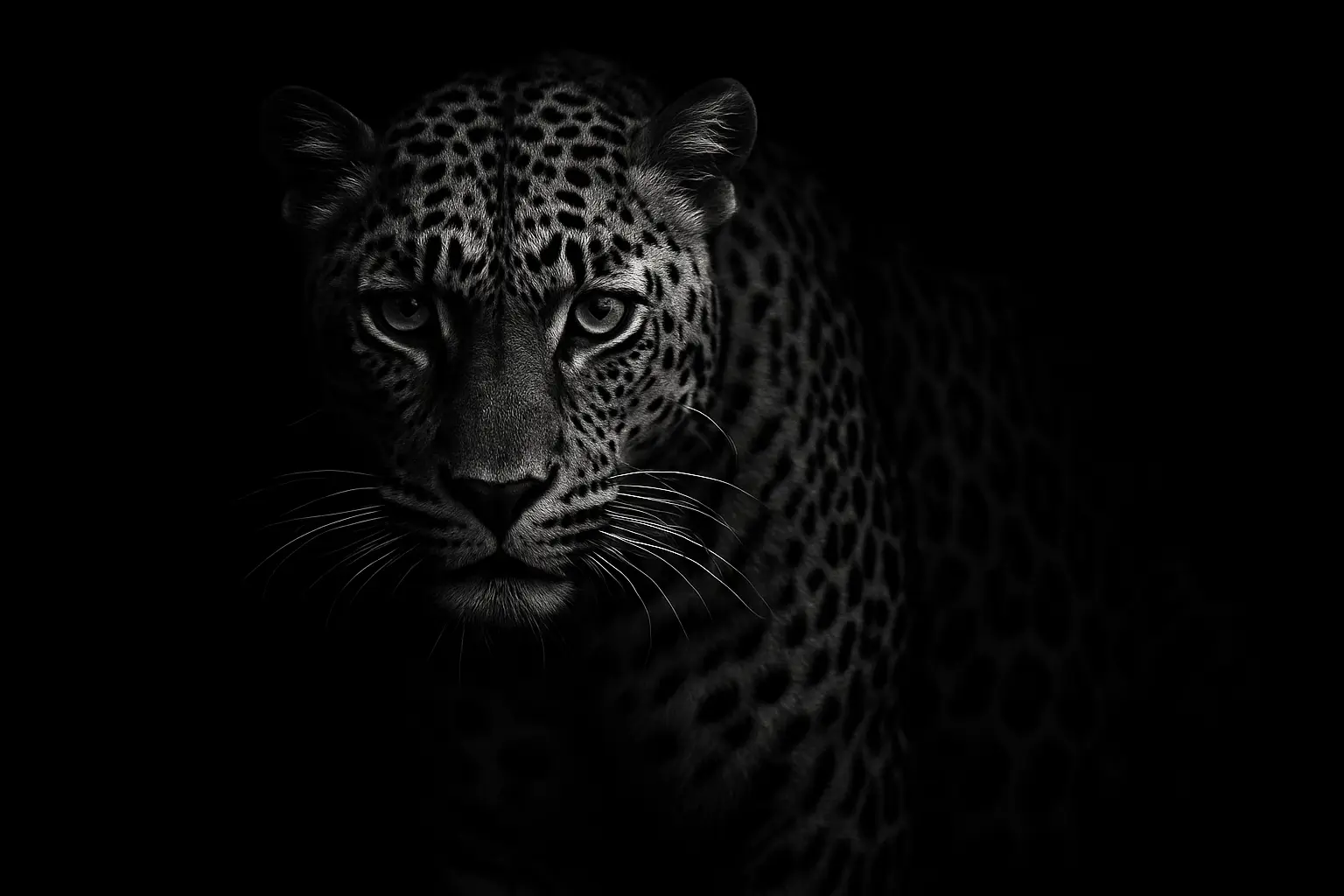
The leopard was on a granite boulder approximately 35 metres from the track. A female, Chaminda said. She had been there since before the gate opened. She was lying on her side in the morning sun with the body language of an animal that was not going anywhere urgently. Her rosette pattern was extraordinary — the gold and black of it, in that specific morning light, looked almost painted.
I stopped thinking about whether it was worth it. That question became irrelevant.
What Happened at the Jeep Jam
I want to tell you about the jeep jam because nobody's guide quite describes it accurately.
Within eight minutes of our arrival at the leopard sighting, there were nineteen jeeps. Within twelve minutes, there were thirty-one. I counted because I was curious. The radio network is fast and the drivers are competitive and when a leopard is found everyone wants a piece of it.
Thirty-one jeeps. All within 50 metres of a single animal. All with engines running at some point. The leopard's ear flicked once. She did not move otherwise.
My reaction was complicated. On one hand, I had just seen a wild leopard at close range in morning light and it was extraordinary. On the other hand, I was watching thirty jeeps crowd around a single wild animal and I felt the discomfort of that clearly.
Chaminda read this correctly without me saying anything. He backed the jeep up and turned around.
"Where are we going?" I asked.
"There's another one," he said.
The Second Leopard
There was not another leopard in the sense he meant. There was a different section of the park, quieter, with three jeeps total, where a young male had been seen recently near a waterhole. We waited there for twenty-five minutes in silence.
The young male appeared from the scrub on the far side of the waterhole at 8:40 AM. He was walking without urgency in the direction of a tree he apparently intended to rest in. He walked across approximately 40 metres of open ground, passed within 20 metres of the jeep, glanced at us once, and disappeared behind the tree.
Three jeeps. Complete silence. One brief glance from the leopard at the assembled humans, the verdict apparently being that we were not worth acknowledging further.
That was the better encounter.
The Rest of the Morning
We saw an elephant herd of fifteen animals including two calves at a waterhole between 9:00 and 9:30 AM. Chaminda cut the engine again and we watched them for twenty minutes. One calf was playing — pushing against its mother, tumbling, trying to drink and not quite managing it, being nudged gently back into position. I have been to zoos. I have seen elephants in controlled environments. This was not like that at all.
We exited at 10:00 AM.
Total morning: 2 leopards, 2 elephant encounters, 1 displaying peacock, 1 golden jackal, painted storks, crocodile, deer, water buffalo, monitor lizards, 215 species of birds potentially (we definitely saw about twelve).
Was it worth it? I have never been asked a more inadequate question.
What I Wish I Had Known Before I Went: 15 Honest Tips
Tip 1: The Jeep Jam Is Real and You Should Have a Plan For It
Yala National Park in Sri Lanka is one of the best places in the world to spot a leopard in the wild — with its open, Africa-like landscape home to herds of water buffalo, spotted deer, elephants, crocodiles and even the occasional sloth bear. But the population of jeeps that want to see the leopard is also enormous.
My plan: agree with your driver before the gate that you prefer small-group encounters over big crowds. If a sighting has more than 10 jeeps, ask whether there is an alternative. The answer might be no — sometimes the animal is in a position with no alternative approach. But sometimes, like my second leopard, the answer is better than you expected.
Tip 2: The 5:15 AM Gate Arrival Is Not Negotiable
You can arrange a safari upon arrival, but this is risky during peak season as good jeeps get booked quickly — the same logic applies to gate timing. Eleven jeeps at 5:15 AM gave us positions 1 through 11. The jeep that arrived at 5:58 AM was position 47 at the gate. The first-through-the-gate advantage for wildlife encounters is real and significant.
Tell your driver specifically: "I want to be at the gate by 5:15 AM." This requires a 4:30 AM pickup from Tissamaharama accommodation.
Tip 3: The Afternoon Safari Is Genuinely Worth Adding
I did not do an afternoon safari on my visit because I thought the morning would be enough. It was enough. But everyone I met who had done two drives said the afternoon was different in a way that complemented the morning rather than duplicating it — different light direction, different animal movement patterns, different emotional register.
The best time to visit Yala National Park largely depends on what you're hoping to see and do — but generally the period between February and June is considered ideal during these months the dry weather reduces foliage and water levels making wildlife especially leopards more visible. Within any given day, both golden hours are worth experiencing. If you have one night at Yala, do both drives.
Tip 4: The Park Entry Fee Is Separate From the Jeep Cost
Park entry is approximately $25 USD per foreign adult. Add jeep hire of $40-60 for a half-day. Total cost is typically $65-85 per person for a half-day safari, or $100-130 for a full day. Note: this guide is slightly outdated — 2026 entry fees are approximately USD 35–42 per foreign adult. Always confirm the all-inclusive total before agreeing to any safari booking.
The question to ask: "Is this the total price including the government park entry fee for all foreign visitors?" If the answer is vague, keep asking.
Tip 5: You Will Not Be the Only Person There — Adjust Your Expectations Accordingly
For the best experience at Yala National Park, I personally recommend dedicating around three days to your visit. Part of the reason for this recommendation is that multiple drives across multiple days increase the probability of quieter, uncrowded sightings.
Yala's Block 1 in peak season is a busy park. The jeep traffic is real. This does not make the experience less extraordinary — but it does require adjusting the mental image from "solitary leopard encounter in pristine wilderness" to "leopard encounter that may involve other vehicles but is still genuinely extraordinary." Both things can be true simultaneously.
Tip 6: Block 5 Is Not a Compromise — It Is Sometimes Better
I did not know about Block 5 before my visit. I found out afterward from another traveller who had specifically requested it. Block 5 (Weheragala/Galge) has dramatically fewer jeeps than Block 1, tall forest canopy, river crossings, and leopard sighting probability of approximately 70%. Some of the finest Yala safari experiences described in traveller accounts happen in Block 5, not Block 1.
Ask your driver: "Can we include Block 5 as part of our route?" A full-day safari can combine both blocks. A dedicated Block 5 half-day offers an entirely different atmosphere from Block 1.
Tip 7: The Sloth Bear Season Is Genuinely Extraordinary — Plan Around It
I did not see a sloth bear. I visited in January. The Palu fruit season — when sloth bears climb ironwood trees in full daylight and become reliably visible — runs from May to August.
The best time to visit Yala National Park to enjoy spotting the leopards, elephants, and wild boars is May through August. If you can choose your travel dates, the May–June window delivers excellent leopard conditions, peak sloth bear activity, AND lower crowd levels than February-March. It is consistently described by experienced Yala operators as the finest overall month.
Tip 8: Your Driver Is the Difference Between Good and Extraordinary
The eleven jeeps in our gate queue at 5:15 AM all entered the park at the same time. By 7:00 AM, we had seen two peacocks displaying and a golden jackal. I do not know what every other jeep had seen, but the drivers were making different decisions about which tracks to take and which sounds to follow.
Chaminda's specific knowledge — which waterhole the elephants had been using in the past three days, which rock face the female leopard had been seen at twice in the previous week — produced our sightings. Not luck. Knowledge applied to a complex landscape over years of observation.
Only certified safari drivers are permitted entry to ensure the highest standards of animal welfare and guest safety — but certification is the minimum. Research the specific guide using named TripAdvisor reviews before booking. The driver is more important than the time of year, the block, or the accommodation.
Tip 9: Bring More Memory Cards Than You Think You Need
I shot 1,847 photographs in four hours. Most of them were garbage — out of focus, wrong angle, subject departed. Approximately 40 were good. Approximately 8 were genuinely excellent. I was shooting on a 128GB card and used 74GB.
Bring at least 128GB of card capacity. Shoot RAW if you care about image quality. Burst mode at leopard sightings — the decisive frame is almost never the first one in a burst sequence.
Tip 10: The Midday Rest Period Is Not Dead Time
The mandatory park closure from 10:00 AM to 2:00 PM initially annoyed me. Four hours of forced idleness in Tissamaharama or at the rest area was not part of my plan.
In practice, it was exactly right. The morning drive requires intense sustained attention. The rest period produced: a large breakfast, a review of the morning's photographs, a 90-minute nap, a walk to the Tissamaharama stupa, and the rediscovery of what it feels like to be genuinely rested before an afternoon activity. The rest period is part of the experience, not an interruption of it.
Tip 11: The Passport Requirement Is Absolute
I nearly forgot my passport. Another person on the same morning drive had forgotten theirs — they could not enter the park, their safari money was not refunded, and they watched the rest of the jeep leave without them. Do not forget the passport. The night before, it goes in the daypack. Not the safe, not the suitcase, not the memory.
Tip 12: The Pre-Dawn Sky Is Part of the Experience
The drive to the gate at 4:50 AM, the Milky Way overhead, the frogs crossing the road — this is not a preamble to the experience. It is the beginning of it. The dry zone climate requires thoughtful preparation — breathable linens in muted tones, a wide-brimmed hat and SPF 50+ to combat the equatorial sun. But also: a moment of appreciation for what the alarm alarm and the darkness and the stars mean. You are about to enter one of the finest wildlife parks on Earth. The drive to the gate is the warm-up for that.
Tip 13: SPF 50+ Is Non-Negotiable — Not a Suggestion
I burned the back of my neck on the first morning drive. I had applied SPF 30 to my face and forgotten my neck entirely. The equatorial UV index at Yala in January can reach 11–12 (WHO "extreme" classification). In an open jeep, from 6:00 AM to 10:00 AM, the cumulative UV exposure is substantial even in what feels like moderate morning conditions.
SPF 50+ on all exposed skin, including neck and the backs of hands. Apply 30 minutes before the 4:30 AM pickup, not at the gate.
Tip 14: The Elephant Encounters Are Not the Consolation Prize
Three people I spoke to after my visit described the elephant herd encounter as the highlight of their safari — more than the leopard. I initially found this surprising. Now I understand it.
The leopard encounter is brief, distant, electric. The elephant encounter — twenty minutes with a family herd at a waterhole, watching a calf struggle to drink and succeed, watching the matriarch move her family away from the approach of a bull, hearing the deep rumbling sound elephants make to communicate — is immersive and prolonged in a way that the leopard encounter rarely is.
Both are extraordinary. Do not arrive at Yala treating the elephants as background noise.
Tip 15: Write the TripAdvisor Review That Night
Chaminda's livelihood depends on named, specific, behavioural TripAdvisor reviews from visitors who can describe what he found and how he found it. The review I wrote that night — naming him, describing the second leopard encounter and why it was better than the first, explaining his crowd-avoidance approach — will be the review that influences the next visitor's booking decision.
Five minutes. Write it while it is vivid. Name the guide. Describe what they did. This is the most meaningful thing you can do for the park's finest operators after the drive.
The Planning Guide: Everything I Learned
Is Yala Worth It?
Yala National Park is one of the best places in the world to spot a leopard in the wild — with its open, Africa-like landscape. Yes, it is worth it — with specific qualifications:
Worth it if: you approach it with realistic expectations, you book a knowledgeable guide, you are prepared for the crowd reality of peak season, and you stay at least one night rather than doing a day trip.
Worth it even without a leopard sighting: the landscape, the elephants, the birds, the dawn light on the lagoons — these are genuinely extraordinary independent of the big cat encounter probability.
The Quick Planning Summary
Best time: May and June (finest wildlife + lowest crowds). February–March (peak leopard probability, highest crowds). November–January (green season, migratory birds, lower crowds).
Duration: One night minimum (two safari drives). Two nights optimal (four drives, 95%+ combined leopard probability).
Cost per person (all-inclusive, 2026): Shared safari: USD 50–67. Private jeep (2 people sharing): USD 80–95. Budget guesthouse: USD 25–50/night.
What to book first: Yala accommodation → Safari operator with named guide reviews → Confirm all-inclusive price before paying anything.
What to bring: Passport, camera (charged), reusable water bottle, SPF 50+, wide-brimmed hat, neutral-coloured clothing, binoculars, snacks.
What time to arrive at gate: 5:15 AM — not 6:00 AM, not 6:05 AM. 5:15 AM.
The Honest Wildlife Probability
Animal Sighting Probability (Dry Season)
Spotted Deer Near-certain every drive
Peacock Near-certain every drive
Monitor Lizard Very high
Mugger Crocodile High
Elephant High (near-certain at good waterholes)
Wild Boar Moderate to High
Golden Jackal Moderate
Painted Stork High (near waterhole sections)
Leopard (1 drive) 60–70%
Leopard (2 drives combined) 80–90%
Sloth Bear (May–Aug only) 40–60%
Sloth Bear (other months) 10–20%
What Nobody's Guide Tells You
Here are the things I did not read anywhere before I went that I wish I had:
The dust is extraordinary. Red laterite dust settles on everything — camera, clothing, teeth — within minutes of the jeep moving. Wet wipes are not a luxury. They are essential.
The pre-dawn cold is real. January at 4:30 AM in Tissamaharama is genuinely cold — around 22°C, which feels significantly cooler in an open vehicle. The fleece I almost left behind because "it's Sri Lanka" was on my body within three minutes of the jeep departing.
The midday rest area is basic. The facility at the mandatory park rest stop sells food and water at elevated prices. Bring your own food and filled reusable water bottle. The captive-audience pricing is significant.
The park smells extraordinary. The specific scent of Yala's dry-zone scrub — warm laterite dust, dried grass, a faint salt suggestion from the Indian Ocean — is one of the most evocative sensory memories of the trip. I caught a hint of it months later in a dried flower arrangement and it transported me completely.
The second encounter is always better. Every leopard encounter I read about was described as perfect. My first encounter was extraordinary. My second encounter — with three jeeps, in silence, watching the animal walk past — was more extraordinary. The reason is simple: by the second encounter, you have stopped being surprised by the leopard's existence and started paying attention to its behaviour. That attention produces a completely different quality of experience.
The park sounds different at each hour. 6:00 AM sounds like birds warming up. 7:00 AM sounds like birds at full volume. 8:00 AM sounds like the park in full daytime mode. 9:30 AM starts to go quiet. The acoustic texture of the morning is one of the finest things about it and nobody writes about it.
My Honest Verdict
I came to Yala National Park in January 2026 expecting to see a leopard. I saw two. I expected the experience to be good. It was better than that.
But here is the more honest verdict: what I was not expecting was how much the rest of it would matter. The peacock at 6:08 AM, spread full in the middle of the track. The jackal's amber eyes in the headlight reflection. The elephant calf falling sideways into the water in an attempt to cool down. The specific quality of the silence when Chaminda cut the engine and we waited.
Going on a safari here is a thrilling, once-in-a-lifetime experience — but the word "once-in-a-lifetime" is doing something misleading. What it should say is: this is an experience that changes the way you understand what wildlife means. It is not a zoo visit. It is not a documentary. It is the actual world, operating on its own schedule, in its own extraordinary landscape, with you as a temporary and completely peripheral observer.
That is what is worth getting up at 3:45 AM for.
That is what Yala is.
Go.
Last updated: May 2026 | Personal safari account from January 2026 visit combined with current 2026 practical information from Yala National Park, Sri Lanka. All costs, regulations, and wildlife information verified against current conditions.
Ready to see this in real life?
Book your Yala safari today and experience the magic firsthand.
Explore Packages