
Yala National Park Animals The Complete 2026 Guide to Every Species You Can See (Big 5, Birds, Reptiles & Hidden Gems)
The definitive guide to every animal in Yala National Park in 2026. Leopard, elephant, sloth bear, crocodile, water buffalo — the Big 5 and beyond. Sighting tips, best months, behaviour facts, and the hidden species most visitors never know to look for.
Every Animal in Yala National Park The Guide Nobody Else Has Written
Most blogs about Yala National Park cover one animal. The leopard gets a paragraph, the elephant gets a mention, and everything else — the 42 other mammal species, the 215 bird species, the 46 reptile species, the extraordinary small mammals that most visitors walk right past — gets lumped into a single sentence at the end.
This is not that guide.
Yala National Park hosts diverse ecosystems ranging from moist monsoon forests to freshwater and marine wetlands, and is important for the conservation of Sri Lankan elephants, Sri Lankan leopards, and 44 mammal species. It is one of the 70 Important Bird Areas in Sri Lanka, harbouring 215 species of bird, 44 mammals, and 46 reptiles.
What follows is the complete animal guide to Yala National Park in 2026 — species by species, with sighting tips, behaviour facts, the best months to see each one, and the hidden gems that experienced wildlife watchers specifically come to find. Bookmark this page before your safari. You will want to refer to it.
The Yala Big 5: Sri Lanka's Version of Africa's Most Famous Wildlife Concept
Africa has its Big Five. Yala has its own — and in several respects, it is more surprising. The "Big Five" animals of Yala — the Wild Water Buffalo, Crocodile, Asian Elephant, Leopard, and Sloth Bear — are the park's charismatic ambassadors, drawing visitors from around the world to experience the magic of the wild.
Big 5 Animal #1: The Sri Lankan Leopard (Panthera pardus kotiya)
The Facts
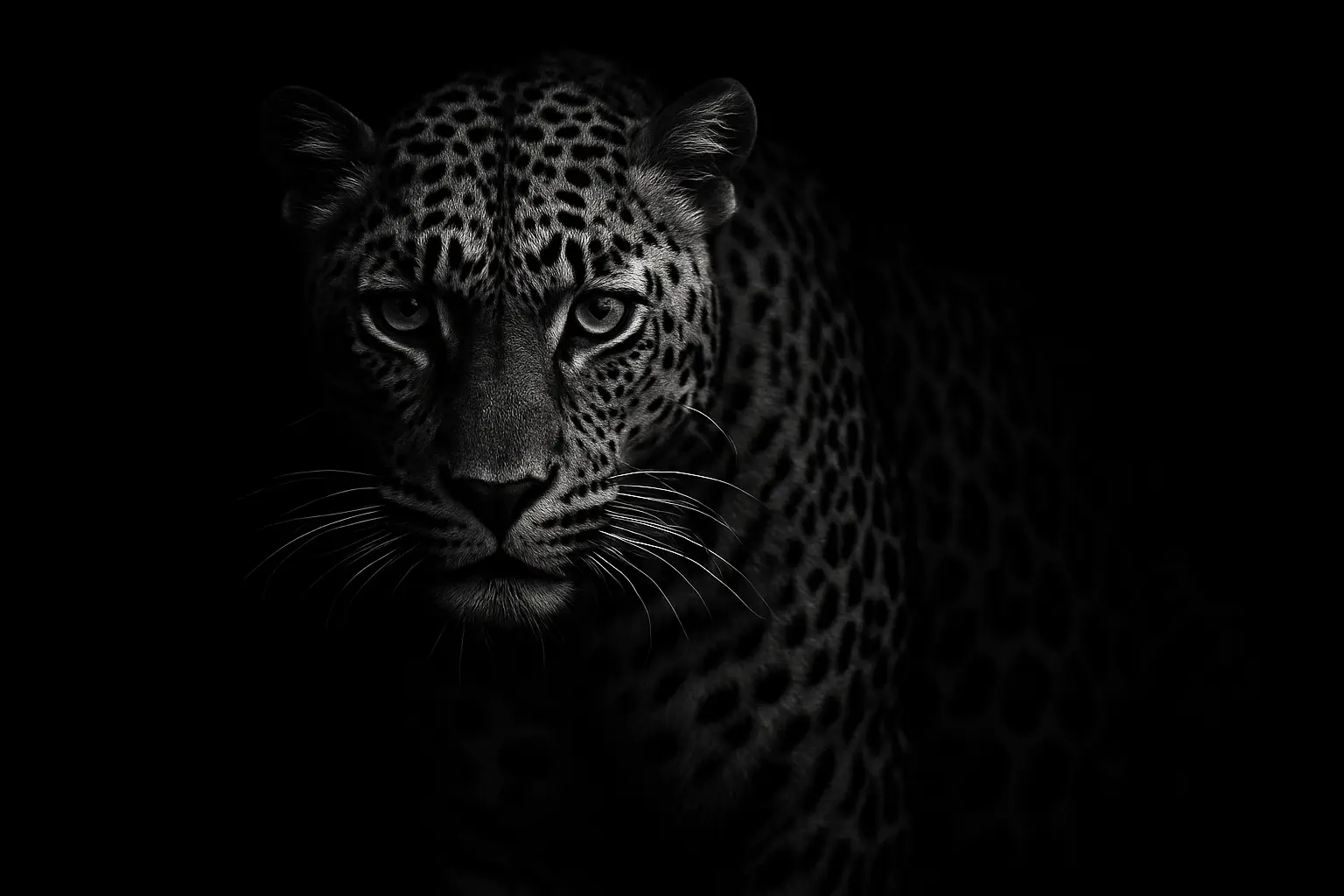
The Sri Lankan Leopard is not simply a regional subspecies in name only — it is a genuinely distinct population, physically larger than its Indian and African relatives. The leopards in Yala are larger than other leopards in Asia due to the absence of tigers and lions — they are the top predators here. Without apex competition, these cats have evolved to fill an ecological role that in other parts of Asia belongs to tigers, and in Africa to lions. They are bolder, more visible, and more confident than leopards almost anywhere else on Earth.
Yala National Park's leopard density is higher than anywhere else on Earth — 2.5 individuals per square mile. The park's Block 1 alone is estimated to host between 55 and 90 resident individuals, depending on the methodology of the survey year.
Behaviour and Ecology
Sri Lankan Leopards are opportunistic hunters whose diet in Yala consists primarily of spotted deer and sambar deer, supplemented by wild boar, monkeys, and occasionally peacocks. Unlike the nocturnal leopard of most wildlife documentaries, Yala's cats are frequently active well into the morning — a consequence of their position as unchallenged apex predator. They feel no urgency to hide.
Dawn or dusk is the perfect time to photograph leopards — you can find them lurking near waterholes with slender necks extended, eyes alert, and golden skin with black rosettes glowing. The granite inselbergs — dome-shaped rocky outcrops scattered throughout Block 1 — serve as the leopard's preferred daytime resting spots. A cat draped across a sun-warmed boulder, with the Indian Ocean visible in the distant background, is the iconic Yala image and a genuinely achievable sighting.
When and Where to See Them
Best months: February to June (dry season). Water concentration at remaining waterholes makes leopard movement predictable. Best time of day: 6:00–9:00 AM and 4:00–6:00 PM. Best location: Block 1 (Ruhuna) for highest probability. Block 5 (Weheragala) for quality encounters without the jeep traffic. Sighting tip: Listen for the sambar deer's bark and the peacock's alarm scream — both are reliable signals that a leopard is nearby.
Big 5 Animal #2: The Sri Lankan Elephant (Elephas maximus maximus)
The Facts
The elephant herd of Yala contains 300–350 individuals. The Sri Lankan elephant is the largest subspecies of Asian elephant and one of the most charismatic wildlife encounters the park offers. The first thing you notice is that the Asian elephant has smaller ears than its African cousin — they are also generally smaller in body size, possibly an adaptation to living in dense jungle rather than the hot open plains.
Tusker elephants — those with prominent ivory — represent less than 8% of the total population. Spotting a tusker in Yala is considered a significant sighting and something experienced guides genuinely celebrate.
Behaviour and Ecology
The eldest female leads the herd while males typically stay alone. Lone bulls are common sights in Yala — often more approachable but occasionally more unpredictable when in musth (the periodic hormonal surge that increases aggression). Always inform your driver if you notice a bull with temporal gland secretion (a dark staining down the side of the face) — this signals musth and requires careful, respectful distance.
Family herds with calves are the most emotionally resonant elephant encounters in Yala. Watching elephants bathe, play, or feed their young is one of the most heartwarming sights in the park. Calves staying close to their mothers, touching them with their trunks, tumbling in water — these moments produce the photographs that visitors describe most often when they return home.
When and Where to See Them
Best months: Year-round. Dry season (February–June) concentrates herds at waterholes for extended, predictable sightings. Best time of day: Early morning and late afternoon. Best location: Blocks 1, 4, and 5. The wetland edges of Block 1 and the river crossings of Block 5 produce particularly dramatic elephant encounters. Sighting tip: Visit in the early morning or late afternoon for the best chance of elephant sightings. The period just before dusk, when herds move toward water in single file through golden light, is arguably the most photogenic wildlife moment available in all of Sri Lanka.
Big 5 Animal #3: The Sri Lankan Sloth Bear (Melursus ursinus inornatus)
The Facts
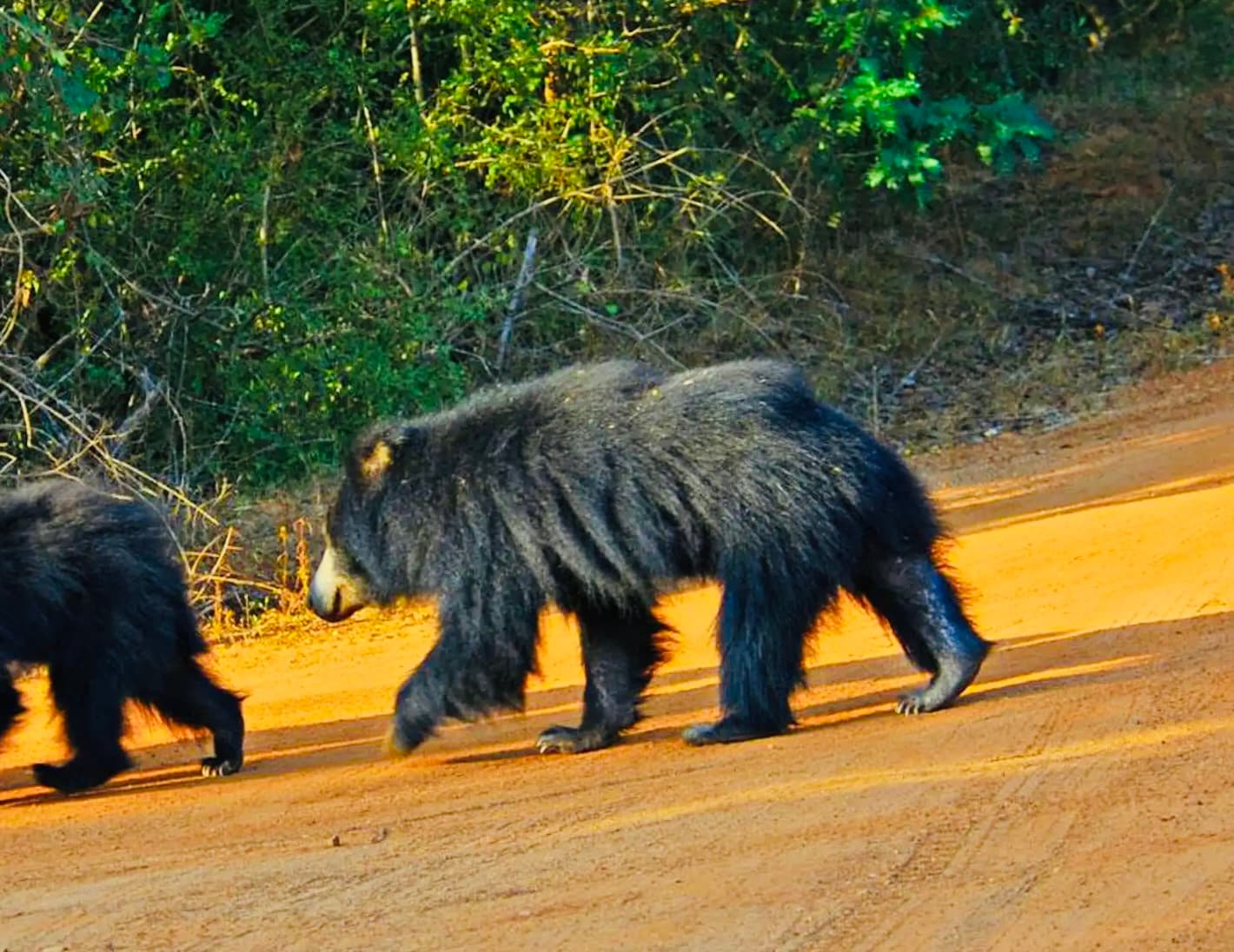
The sloth bear is the most underrated wildlife encounter in Yala — and frequently the one that visitors describe most vividly after returning home. The Sri Lankan Sloth Bear is a subspecies of the sloth bear found mainly in lowland dry forests in Sri Lanka. It is omnivorous, feeding on nuts, berries, and roots, as well as carrion and meat. One of its main staples is insects, which it removes from rotting stumps and trees with its long, hairless snout.
The sloth bear's physical appearance is distinctive and slightly comical: shaggy black fur, a cream-coloured V-shaped chest marking, long curved claws, and a mobile, elongated snout adapted for sucking insects from underground colonies. They develop an adapted lower lip used for sucking up insects, making a loud hoovering sound as they feed. Hearing a sloth bear at work on a termite mound — the extraordinary vacuuming noise — is an experience that delights every visitor who witnesses it.
The Palu Season: The Single Greatest Wildlife Spectacle in Sri Lanka
Sloth bears that reside in Yala have immense fun climbing Palu trees for the delicious Palu fruit — moving agilely from leafy branches to sturdy trunks as they feed on the yellow fruit between April and June. During this fruiting season, sloth bears that are normally elusive and largely nocturnal become reliably visible in daylight, climbing ironwood trees with surprising agility and descending with a lumbering confidence that is genuinely unlike anything else in Asian wildlife viewing.
May is among the favourite months to visit Yala, as it marks the start of Palu season — the best time to see sloth bears. The berries of the ironwood tree, ripe Palu is the bears' favourite meal. You'll find the black, shaggy bears in and around the trees, gorging themselves silly or sleeping off their feast.
When and Where to See Them
Best months: May to August (Palu fruit season). Outside this window, sightings require significantly more patience and luck. Best time of day: Early morning and late afternoon. The hours immediately before and after midday occasionally produce sightings at shaded tree bases. Best location: Forest edges throughout Block 1. Rocky outcrops where termite colonies are active. Sighting tip: The sloth bear is most commonly seen during the fruiting season of the Palu tree, around June and July. If Palu season coincides with your visit, request that your driver specifically targets known Palu groves in the pre-dawn hour.
Big 5 Animal #4: The Mugger Crocodile (Crocodylus palustris)
The Facts
Yala's lagoons and waterways support a healthy, well-established population of mugger crocodiles — one of three crocodilian species found in the Indian subcontinent. At Yala, muggers grow to impressive sizes: mature males can reach 4–5 metres in length and weigh over 300 kilograms. These are genuinely ancient-looking animals, and close-range encounters — which the park regularly delivers — produce a visceral recognition of something fundamentally prehistoric.
Behaviour and Ecology
Mugger crocodiles are primarily fish hunters but opportunistically take waterfowl, monitor lizards, spotted deer at the waterhole edge, and occasionally larger prey. In Yala, their most visible behaviour is thermoregulation: they bask with open mouths on lagoon banks, absorbing solar heat in the morning and releasing it in the afternoon. A lagoon bank in the dry-season morning, lined with basking crocodiles and surrounded by painted storks, is one of the most viscerally dramatic scenes Yala produces.
When and Where to See Them
Best months: Dry season (February–June). Crocodiles concentrate at permanent water sources as smaller water bodies dry up. Best time of day: Morning basking sessions from 7:00 AM onward. Best location: The coastal lagoons of Block 1, particularly around Buthuwa Tank and the wetlands near Palatupana. Sighting tip: Scan lagoon banks systematically from left to right. Crocodiles are masters of motionlessness — they are frequently missed on first pass because their stillness reads as log or rock.
Big 5 Animal #5: The Wild Water Buffalo (Bubalus arnee)
The Facts
Wild Water Buffalos are massive herbivores and are the largest living wild bovids. They are known for their impressive horns and formidable presence. In Yala, the Wild Water Buffalo can be spotted in wetlands and grasslands, often seen grazing in herds. These bovines are adapted to a semi-aquatic lifestyle — often seen wallowing in mud to cool off and protect themselves from parasites.
A fully mature wild water buffalo bull is a genuinely imposing animal — standing nearly 1.8 metres at the shoulder and carrying a spread of horns that can exceed 2 metres in width. At close range, from a jeep, they produce a startled double-take that no traveller fully anticipates.
When and Where to See Them
Best months: Year-round, but most reliably in the dry season when they concentrate at wetlands. Best time of day: Early morning and late afternoon, when herds move to water. Best location: Wetland margins throughout Blocks 1 and 5. The open grasslands near Buthuwa Tank. Sighting tip: Look for mud-wallowing activity — the dark, churned mud around waterholes indicates recent buffalo presence. Approach downwind.
Beyond the Big 5: The Complete Mammal Guide to Yala
Spotted Deer / Axis Deer (Axis axis)
The most numerous large mammal in Yala and the primary prey species for the leopard. Spotted deer are present in virtually every habitat across the park in herds of 10–50 animals. They are not merely background scenery — their alarm behaviour is your most reliable early-warning system for big cat activity. A herd of spotted deer suddenly alert, with heads raised and ears forward, all facing the same direction into the scrub, almost always means a predator is nearby.
Sambar Deer (Rusa unicolor)
Larger, darker, and more solitary than the spotted deer, the sambar is the preferred prey of Yala's leopard. The sambar's bark — a sharp, single-note alarm call — is unmistakable and universally recognised by experienced guides as the highest-confidence leopard indicator in the park. When your driver cocks their head at the sambar's call and changes direction, pay attention.
Grey Langur / Hanuman Langur (Semnopithecus priam)
These long-tailed, silver-grey monkeys inhabit Yala's woodland areas in troops of 10–25 individuals. Their raucous alarm calls carry far through the canopy and serve as a secondary big-cat indicator. Langur troops are frequently visible in the tree canopy near the Sithulpawwa temple area.
Toque Macaque (Macaca sinica)
Endemic to Sri Lanka, the toque macaque is distinguished by the distinctive whorl of hair at the crown of the head. These intelligent, highly social primates are found throughout Yala in troops of 20–30 animals, frequently raiding the Sithulpawwa temple area where pilgrims leave food offerings.
Stripe-Necked Mongoose (Herpestes vitticollis)
One of Yala's most frequently spotted small carnivores — a russet-brown, purposeful animal that forages along the track edges for lizards, insects, and small mammals. The stripe-necked mongoose is Sri Lanka's largest mongoose species and has a confidence around vehicles that makes it among the easiest of Yala's smaller mammals to observe closely.
Ruddy Mongoose (Herpestes smithii)
Smaller and more uniform brown than the stripe-necked species, the ruddy mongoose is another frequent track-edge sighting, particularly in the rocky scrub areas of Block 1 near Palatupana.
Golden Jackal (Canis aureus)
Yala's jackals are frequently spotted in the early morning and late afternoon, trotting along tracks or scavenging near leopard kill sites. They are often overlooked by visitors focused on bigger targets — which is a genuine mistake. A jackal in Yala's golden morning light, tail low and eyes bright, is a photogenic and behaviourally fascinating animal.
Indian Grey Mongoose (Herpestes edwardsi)
The most commonly spotted mongoose in the park. Their fearless demeanour around jeeps and their habit of crossing tracks at a purposeful trot make them a reliable, charming encounter throughout the drive.
Fishing Cat (Prionailurus viverrinus)
One of Yala's most secretive and sought-after small cats. The fishing cat is among the other mammals that can be seen in Yala. Adapted to semi-aquatic life, it swims confidently and hunts fish, frogs, and small waterfowl at lagoon edges. Sightings are rare and considered a genuine highlight by experienced wildlife watchers — requiring early starts and a guide who specifically knows the lagoon edges where this species is most active.
Rusty-Spotted Cat (Prionailurus rubiginosus)
The Rusty-spotted cat is among the rare mammals of Yala. One of the world's smallest wild cats — roughly half the size of a domestic cat — the rusty-spotted cat is nocturnal and virtually never seen on standard daytime safaris. Night drives, where permitted in specific zones, occasionally produce sightings. For dedicated small-cat enthusiasts, mentioning this species to your guide in advance increases awareness and scanning effort at likely habitat.
Red Slender Loris (Loris tardigradus)
The red slender loris is among the mammals that can be seen in Yala. A tiny, enormous-eyed nocturnal primate that clings to thin branches in dense scrub forest. Night safari permits are required and this is not a guaranteed sighting — but the loris, caught in a spotlight beam, peering back with those huge reflective eyes, is one of the most memorable small-mammal encounters in all of Asia.
The Complete Bird Guide to Yala: 215 Species and the Ones to Prioritise
Yala is one of the 70 Important Bird Areas in Sri Lanka, harbouring 215 bird species including six endemic species of Sri Lanka. For birders, the park is a destination in its own right — independent of the leopard.
The Six Sri Lanka Endemic Birds of Yala
These species exist nowhere else on Earth and are specifically sought by international birders visiting Yala:
Sri Lanka Grey Hornbill (Ocyceros gingalensis): The Sri Lanka grey hornbill is one of the endemic bird species found at Yala. A distinctive black-and-white bird with a large curved bill, frequently heard before being seen — its cackling call carries through the canopy.
Black-capped Bulbul (Rubigula melanictera): The black-capped bulbul is one of Yala's endemic species to look out for. Olive-green with a distinctive black cap, usually found in pairs in dense scrub.
Sri Lanka Junglefowl (Gallus lafayettii): The national bird of Sri Lanka. The male is spectacularly coloured — fire-orange and crimson plumage with yellow-tipped comb. Common throughout Yala's scrub habitats, often encountered crossing tracks in the early morning.
Brown-capped Babbler (Pellorneum fuscocapilla): A skulking, terrestrial species of dense undergrowth. More often heard than seen — its repetitive, musical whistle is a characteristic sound of Yala's forest interior.
Ceylon Swallow (Cecropis hyperythra): A fast-flying insectivore of open areas. Aerial and swift, distinguished from other swallows by its rufous underparts.
Yellow-fronted Barbet (Psilopogon flavifrons): Found in the taller forest sections of the park, this compact, colourful barbet produces a repetitive monotone call that experienced guides use as a locator.
The Must-See Waterbird Spectacle
Yala's coastal lagoons, during the dry season, host one of the most impressive waterbird aggregations in South Asia. Painted storks, purple herons, grey herons, lesser adjutant storks, and black-necked storks forage in the shallows alongside great white pelicans and spoonbills. The visual spectacle of 200+ large waterbirds working a lagoon edge at dawn — backlit by the rising sun — is something that bird photographers plan entire Sri Lanka trips around.
Greater Flamingo (Phoenicopterus roseus): A spectacular seasonal visitor to Yala's coastal lagoons during the northeast monsoon period. Flocks of flamingos in Yala's wetland landscape, with the Indian Ocean visible beyond, produce an image that very few visitors anticipate.
Blue-tailed Bee-eater (Merops philippinus): Blue-tailed bee-eaters are among the wealth of wildlife at Yala for visitors to enjoy. Perched on exposed branches in loose colonies, these vivid turquoise-and-chestnut birds launch aerial sallies after insects before returning to their perch — one of the most reliably photogenic birds in the park.
Crested Serpent Eagle (Spilornis cheela): A large, dramatic raptor frequently seen perched at eye level on dead branches near forest edges. Its distinctive call — a rising, piping whistle — is one of Yala's most recognisable sounds. This eagle specifically hunts snakes and is frequently seen descending to the track with a serpent in its talons.
Indian Roller (Coracias benghalensis): Sri Lanka's de facto colour ambassador. The roller perches conspicuously on exposed branches and telephone wires, then launches into a tumbling flight display that reveals the extraordinary electric-blue wings hidden beneath its brown body. Spectacular and common throughout Yala.
The Migratory Bird Season: November to February
The northeast monsoon transforms Yala into one of Asia's premier birding destinations. Thousands of migratory species arrive from Europe, Central Asia, and the Himalayas to winter in Yala's wetlands. Rare European waders, Palaearctic raptors, and waterfowl species that breed as far north as Siberia can be found at Yala's lagoon edges between November and February — making this period the finest time for serious bird photography in the park.
The Reptile Guide to Yala: 46 Species Worth Knowing
Yala hosts 46 reptile species — a largely overlooked component of the park's biodiversity that rewards any visitor who takes the time to look beyond the mammals.
Bengal Monitor Lizard (Varanus bengalensis)
The most commonly encountered reptile in Yala — a large, muscular lizard that can reach over 1.5 metres in length. Monitor lizards are found throughout the park, frequently crossing tracks, climbing trees to raid bird nests, and scavenging near water sources. Monitor lizards are among the wealth of wildlife at Yala. Their prehistoric appearance and confident gait make them a more compelling encounter than most visitors initially expect.
Water Monitor (Varanus salvator)
Larger and more aquatic than the Bengal monitor, the water monitor is typically found near the park's lagoons and waterways. These animals swim confidently and can reach over 2 metres in length. Their slow, undulating walk and flickering forked tongue give them an ancient, otherworldly quality.
Indian Cobra (Naja naja)
Present throughout Yala but rarely seen — a consequence of their preference for avoiding vibration (such as approaching jeeps). Occasional sightings on warm road surfaces in the early morning are the most reliable encounter scenario. Experienced guides treat all cobra sightings with respectful distance and genuine excitement.
Russell's Viper (Daboia russelii)
One of Asia's most medically significant venomous snakes — thick-bodied, strikingly patterned with a chain of oval blotches, and responsible for the majority of serious snakebite cases in Sri Lanka. Present in Yala's scrub habitat, occasionally seen crossing tracks. Respected from distance, it is a genuinely impressive and photogenic reptile.
Indian Star Tortoise (Geochelone elegans)
One of the most charismatic reptile encounters in Yala — a medium-sized tortoise with a spectacularly patterned domed shell of geometric star patterns. Found in open scrub habitat, Indian star tortoises are increasingly encountered by sharp-eyed safari visitors and consistently produce excitement disproportionate to their modest size.
Sri Lanka Kangaroo Lizard (Otocryptis wiegmanni)
A small, endemic lizard found in the forest floor leaf litter — bipedal when alarmed, rising on its hind legs to sprint away from disturbance in a movement that perfectly earns the common name. Rarely noticed by visitors but a genuine highlight for herpetology enthusiasts who ask their guide to slow down in shaded forest areas.
The Hidden Gems: Animals Most Visitors Never Know to Look For
Golden Palm Civet (Paradoxurus zeylonensis)
The golden palm civet is among the mammals that can be seen in Yala. A nocturnal, arboreal mammal endemic to Sri Lanka — rarely encountered on standard daytime safaris but occasionally spotted in the canopy during early-morning drives when individuals have not yet retreated to daytime roosts.
Mouse Deer / Indian Chevrotain (Moschiola indica)
The occasional Mouse Deer is among the rarer mammals of Yala. The world's smallest hoofed mammal — barely larger than a domestic cat — the mouse deer is a nocturnal, extraordinarily shy species of dense forest undergrowth. A daytime sighting is genuinely rare and produces disproportionate excitement among experienced wildlife watchers who understand its significance.
Indian Pangolin (Manis crassicaudata)
Critically endangered, nocturnal, and so rare that even experienced Yala guides may go months without a sighting. The pangolin — armoured with overlapping keratin scales, rolling into a defensive ball when threatened — is the most sought-after "accidental" sighting in Yala for serious wildlife enthusiasts. If you see one, you are in a small group of exceptionally fortunate visitors.
Sri Lanka Spiny Mouse (Mus fernandoni)
A Sri Lanka endemic rodent found in rocky scrub habitat — genuinely tiny and genuinely overlooked. For mammal-listers completing Sri Lanka's endemic species checklist, this is a significant tick.
Month-by-Month Animal Sighting Guide: What to See When
Month Leopard Elephant Sloth Bear Birds Notes
January Good Good Low Excellent (migrants) Park reopens mid-October; January offers good dry-season conditions
February Excellent Excellent Low Very Good Dry season begins; water concentrates animals
March Excellent Excellent Low–Moderate Good Peak leopard visibility window opens
April Excellent Excellent Good Good Finest leopard photography month
May Very Good Very Good Excellent Moderate Palu season begins; sloth bears emerge reliably
June Very Good Good Excellent Moderate Peak sloth bear and leopard combination
July Good Good Very Good Moderate Palu season continues
August Moderate Good Moderate Good Green season begins; vegetation thickens
September–October Park Closed Park Closed Park Closed — Annual conservation closure
November Moderate Good Low Excellent Migratory birds arrive; park green and atmospheric
December Good Good Low Excellent Birding peak; festive season crowds
The Ecosystem That Makes It All Possible
Understanding why Yala supports such extraordinary biodiversity requires understanding the landscape itself. The vast terrain is composed of an extensively diverse ecology and landscape — from shrub jungle, to riverine forests, moist and dry monsoon forests, semi-deciduous forests, thorn forests, to open planes of grassland, fresh and brackish water wetlands, and sand dunes.
Block One specifically is dominated by magnificent, and often huge rocky outcrops, many hiding seasonal pools — these granite inselbergs are the foundation of Yala's visual character and the preferred resting habitat of the leopard.
The park's position on the Indian Ocean coast creates a unique microclimate — the sea breeze moderates temperatures, the coastal lagoons support enormous waterbird populations, and the interface between marine and terrestrial ecosystems produces a biodiversity that purely inland parks cannot replicate.
Frequently Asked: The Animal Questions Most Visitors Google
Q: What is the most common animal in Yala National Park? The spotted deer (axis deer) is by far the most numerous large mammal, present in herds throughout all park blocks. Peacocks are arguably the most visually inescapable — their calls provide the constant background soundtrack of every Yala safari.
Q: Can you see leopards and elephants on the same safari? Yes, and frequently. A single morning drive in Block 1 routinely produces sightings of both species. A full-day safari across Blocks 1 and 5 adds sloth bear probability to the combination.
Q: Are there tigers in Yala National Park? No. Sri Lanka has never had a wild tiger population. The Sri Lankan Leopard evolved in the absence of tigers and lions — which is precisely why it occupies such an openly dominant role in the ecosystem and why it is so reliably visible.
Q: Are there dangerous animals in Yala that visitors should know about? All of Yala's wildlife is wild and should be treated with respect. Elephants, particularly lone bulls in musth, can be unpredictable at close range. Crocodiles are potentially dangerous at water edges — never leave the jeep near water. Venomous snakes, including cobras and Russell's vipers, are present but extremely unlikely to be encountered dangerously. The safari jeep provides complete protection for all standard wildlife encounters.
Q: What is the rarest animal in Yala National Park? The Indian Pangolin is among the rarest regular residents — critically endangered globally, nocturnal, and infrequently encountered even by regular visitors. The Rusty-spotted cat is another extremely rare sighting. Among birds, some of the visiting Palaearctic raptors during the migratory season achieve rare-bird status for their occurrence records in Sri Lanka.
Q: Do any whales or dolphins appear at Yala? The park's coastal zone technically includes the Indian Ocean shoreline, and spinner dolphins are occasionally visible from the beach at Patanangala. For dedicated whale watching, Mirissa — approximately 100 km west along the south coast — is Sri Lanka's premier whale-watching location, with blue whales, sperm whales, and pods of spinner and bottlenose dolphins reliably encountered from November to April.
The Animal You Will Remember
Ask anyone who has done a Yala safari what animal they remember most. The answer is almost never the obvious one. It might be the leopard — but it might equally be the sloth bear at 7:30 AM, rolling a boulder with one paw to expose a termite colony underneath, completely absorbed in breakfast and entirely indifferent to your presence 20 metres away.
Or it might be the painted stork, standing motionless in a lagoon at sunrise with the morning mist still on the water, while a crocodile slides silently beneath the surface nearby.
Or the golden jackal, pausing mid-trot on the track to look directly at your jeep — amber eyes, dust on its paws, the entire landscape framed behind it.
There is a wealth of wildlife at Yala for visitors to enjoy — 44 mammals, 215 birds, 46 reptiles, and an entire world of small creatures that most visitors never know to look for. The safari that opens your eyes to all of it, not just the headline act, is the one you will talk about for the rest of your life.
Last updated: May 2026 | Species data, sighting tips, and ecological information verified against current wildlife records and 2026 safari reports from Yala National Park, Sri Lanka.
Ready to see this in real life?
Book your Yala safari today and experience the magic firsthand.
Explore Packages