What to Expect on a Yala National Park Safari 2026: A Complete Hour-by-Hour Guide to the Most Extraordinary Wildlife Experience in Asia
Exactly what happens on a Yala National Park safari hour by hour, sense by sense, from the 4AM alarm to the leopard encounter to the exit gate. The most complete "what to expect" guide ever written for Yala in 2026.
The Blog Nobody Has Written — Until Now
Every Yala safari guide tells you what to bring and when to arrive and how much to pay. Very few tell you what it actually feels like — from the moment your alarm sounds at 3:45 in the morning to the moment you drive back through the park gate with photographs you can barely believe you took.
A Yala safari is not just about ticking animals off a list. It's about the experience — the early morning light filtering through the trees, the anticipation of what lies ahead, and the connection you feel with nature in its purest form.
This guide is that experience, written down. Not as a checklist. Not as a price comparison. As a complete, honest, vivid account of what the Yala safari is actually like — combined with the practical knowledge that makes the difference between a good visit and an extraordinary one.
Read this the night before your safari. It will change how you experience the morning.
The Night Before: What You Should Do at 9 PM
You are in your guesthouse in Tissamaharama. Or at your lodge in the park buffer zone. The sun went down an hour ago and the air has cooled dramatically — from the 38°C afternoon to something that now, finally, feels breathable.
This is the moment most first-time Yala visitors underestimate. The night before the safari is not just preparation time. It is the first part of the experience.
Charge everything. Both camera batteries. The backup battery. Your phone. The power bank. Not 80% — 100%. The morning drive runs 4 hours and there are no charging points in the scrub jungle of Block 1.
Format your memory cards. One 128GB card minimum. Two is better. Burst shooting at a leopard sighting can consume 4GB in 90 seconds. Run out of card space during the finest encounter of the drive and you will remember it for the wrong reasons.
Lay out your clothing. In the dark at 4 AM, reaching for a black fleece that has blended into your bag is a problem. Khaki or olive shirt on the top of the bag. Light fleece beside it. Hat on top of the camera. Everything visible, everything ready.
Brief yourself. Look up the current leopard activity reports — your guesthouse host often knows which areas have been productive in the last 48 hours. Ask them. The information is freely shared and genuinely useful for directing your driver.
Set two alarms. At 3:45 AM and 3:55 AM. Not because you don't trust yourself to wake up — because the compounding anxiety of potentially sleeping through the most important morning of the trip will rob you of the deep sleep you need. Two alarms and you can sleep without the shallow vigilance that single-alarm pre-dawn starts produce.
Go to bed by 9:30 PM. This is not optional.
3:45 AM: The Alarm
It sounds wrong. An alarm at this time always sounds wrong — like a mistake, like something has gone badly. The room is completely dark. The Tissamaharama night outside is quiet except for the occasional dog, the occasional motorcycle on the distant main road.
Get up immediately. This is the one behavioral rule of the Yala morning safari: do not negotiate with the alarm. Do not check the time and calculate whether five more minutes is possible. It is not. The jeep arrives at 4:30 AM. The gate opens at 6:00 AM. Every minute of margin that exists between now and the park gate belongs to you — and only if you use it.
Dress. The pre-dawn air is genuinely cool — particularly in February and March when the dry season mornings drop to 22–24°C. The fleece that seemed unnecessary when you packed it in the European summer will be on your body within 30 seconds of leaving the room.
Eat something small if your guesthouse has prepared it — a hopper, a banana, a piece of pol roti. Nothing substantial. The morning drive runs on adrenaline more than calories, and a heavy breakfast at 4 AM produces a very specific kind of morning-drive discomfort.
4:30 AM: The Jeep Arrives
You hear it before you see it — the particular sound of a diesel 4x4 engine on a quiet road that carries farther than it should in the pre-dawn silence. The headlights sweep across the guesthouse gate.
Your driver steps out. They have been awake since 3:30. They have driven this route hundreds of times. In the dark, the jeep looks enormous — the open-sided body looming above road level, the roll cage outlined against the slightly less dark sky.
A Yala safari jeep has the capacity for up to 6 people — the safari tour operator will usually arrange a pick-up and drop-off at your accommodation.
Mount the beanbag on the door frame before you get in — the driver will help if you haven't done this before. Put your camera in position. Check the battery. Check the settings: RAW format, continuous AF, burst mode at maximum frame rate, ISO set to auto with a ceiling of 6400 for the pre-dawn hour that will demand it.
Then — and this is the thing most travellers forget in the pre-dawn rush — sit quietly for a moment. Look at the sky above the jeep. In Tissamaharama's dry-zone darkness, the stars are extraordinary. You are about to enter one of the finest wildlife parks on Earth. Allow that fact its proper weight for 30 seconds before the drive begins.
4:30 AM — 5:15 AM: The Drive to the Gate
The road from Tissamaharama to the Palatupana Gate is 25 minutes. In the dark, through dry-zone scrub with the headlights illuminating the red laterite road edges, it passes through the specific geography of anticipation — the landscape becoming progressively wilder, the town lights receding in the mirrors, the vegetation pressing closer to the road.
Your driver is quiet. This is correct. The safari experience begins the moment you leave the guesthouse, not the moment you enter the gate.
Watch the road edges. In the early darkness, before the gate, the buffer zone between the park boundary and the main road hosts its own wildlife. Spotted deer freeze in the headlights, eyes catching the beam. Occasionally a monitor lizard crosses. Sometimes, in the Palu season months of May through August, a sloth bear has been spotted in this pre-gate corridor — already feeding in the darkness before the park's morning session officially begins.
The gate comes into view. A cluster of red tail lights — other jeeps that have had the same idea as your driver. Count them. Early morning safaris starting at 4:30 AM and late afternoon sessions post-4 PM yield the highest success rates since leopards are most active during cooler hours. The drivers who understood this are the ones in front of you at 5:15 AM. Fifteen vehicles ahead of you is fine. Sixty is less ideal but still manageable.
The gate ranger checks documentation — your passport (you remembered it), the driver's licence, the vehicle permit. This process takes 3–5 minutes per vehicle. By 5:45 AM, you are at the front of the queue. By 5:50 AM, you are at the barrier.
5:50 AM — 6:00 AM: Waiting at the Gate
This is one of the most atmospheric moments of the entire experience, and one that almost no guide bothers to describe.
The Palatupana Gate barrier is down. The park is on the other side — darkness and the sound of nocturnal animals completing their night's activity, the first bird calls beginning in the canopy above the gate fence. The smell of the dry-zone scrub carries through the pre-dawn air: something between dust and vegetation, warm and ancient.
In the jeeps around you, everyone is silent. Cameras are positioned. Windows — on enclosed vehicles — are down. The competitive tension of the queue has dissolved into something that feels closer to collective reverence.
At exactly 6:00 AM, the barrier rises.
6:00 AM: The Gate Opens — Everything Changes
The first 90 minutes of the Yala morning safari are, in the unanimous experience of every guide and photographer who knows the park, the finest 90 minutes available in Sri Lanka wildlife watching.
Yala, with all its flora and fauna, is a unique experience and one of the must-sees in Sri Lanka. The park is worth visiting at all times of the year. But these first minutes after the gate opens exist on a different plane from the rest of the drive.
The light at 6:00 AM in the dry season is not quite sunrise — it is the pre-sunrise light, directional and low, casting long blue-gold shadows across the scrub. The temperature is still cool. The tracks are empty of all vehicles except the handful that entered ahead of you. The soundscape is extraordinary: a peacock's first territorial call carrying across 500 metres of open scrub, a sambar deer's cautious footfall, the specific silence of a landscape that has been undisturbed all night and is not yet ready to acknowledge the day.
Your driver moves slowly. Not because they are in no hurry — but because observation at walking pace in this light is dramatically superior to observation at driving pace. Thanks to a deep understanding of animal behavior and the ability to read their signals, experienced guides are lucky enough to spot a leopard and enjoy the sighting almost entirely to themselves. That reading of signals happens at walking pace, not at speed.
The first animal of the morning is almost always a spotted deer. They appear from the tree line at 6:05 or 6:10, moving toward the waterholes in family groups — a doe and two juveniles, their spots still visible in the low light, their ears rotating independently as they scan for predators. They are beautiful in the ordinary, daily-occurrence sense of the word. They are also the most important alarm system in the park — their behaviour tells you, continuously and in real time, what is happening in the vegetation around them.
Watch their ears. Watch where they are looking. When 12 spotted deer simultaneously raise their heads and orient in the same direction — that is the signal.
6:00 AM — 7:30 AM: The Core Tracking Window
Your driver is doing several things simultaneously that appear to be simply driving. They are listening for alarm calls. They are reading fresh tracks on the laterite road surface. They are scanning the inselbergs — the granite dome-shaped outcrops that rise from the scrub every few hundred metres — for the horizontal shape of a resting leopard. They are watching the behaviour of every bird above the waterhole margins. They are assessing the wind direction relative to their position and the most likely leopard routes.
This is not performance. This is a skill set built over thousands of hours in this specific landscape, applied in real time with an intensity that most visitors do not notice because it manifests as what looks like a relaxed morning drive.
The sambar bark: When you hear it — a single, sharp, carrying note that repeats every 10–15 seconds — you will know it immediately. It is unlike any other sound in the park. Your driver's head will turn before the sound has fully registered in your conscious mind. They will listen to the location, the direction, the intensity. Then they will make a decision about whether to pursue it or wait for the next signal.
The peacock scream: Different from the peacock's territorial call (which you will hear constantly throughout the morning as background sound). The alarm scream is higher, more urgent, repeated faster. It means something large is moving in the ground vegetation below the peacock's perch.
The langur cascade: When grey langurs in the canopy above a specific tree begin their raucous alarm calls and all face downward toward the same spot on the ground — something is there. The langur's vantage point from 15 metres up gives it a view of ground-level predator movement that you cannot replicate from the jeep.
When your driver cuts the engine and reaches for the radio — they have found something. Either independently, through tracking, or through a radio alert from another driver. The jeep goes silent. Everyone stops moving.
The Leopard Encounter: What Actually Happens
There are two versions of this moment, and they produce different experiences.
Version 1: You find it first.
Your driver has been reading the alarm calls. Three consecutive sambar barks from the same direction. A peacock on a tree stump orienting consistently southward. The driver turns the jeep onto a secondary track, cuts the engine, and drifts for 50 metres. Then stops.
There is nothing visible. The scrub is dense at this point, the light coming through the canopy at a low angle that creates deep shadow in the vegetation below. Your driver points — a specific direction, specific distance. You raise the binoculars.
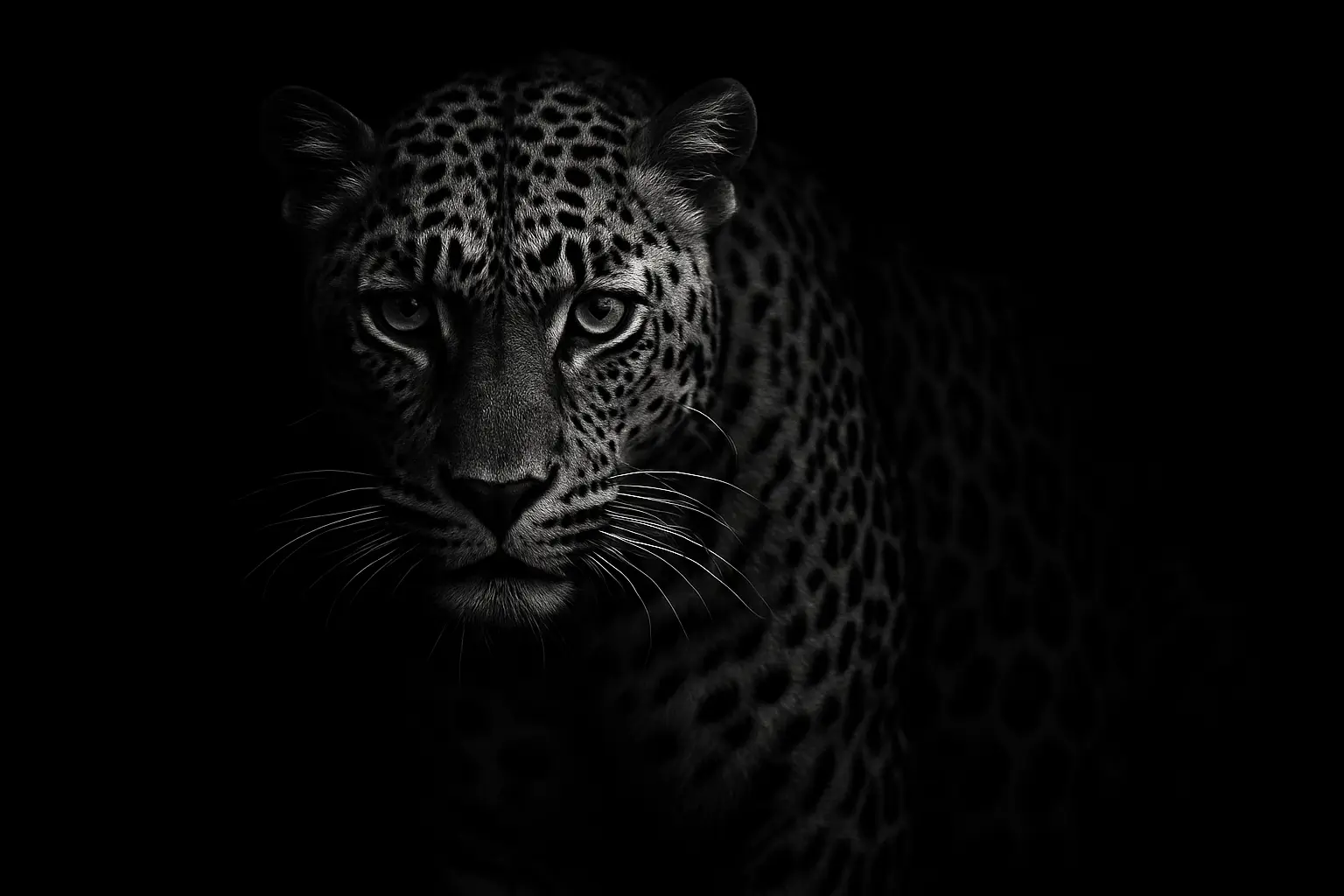
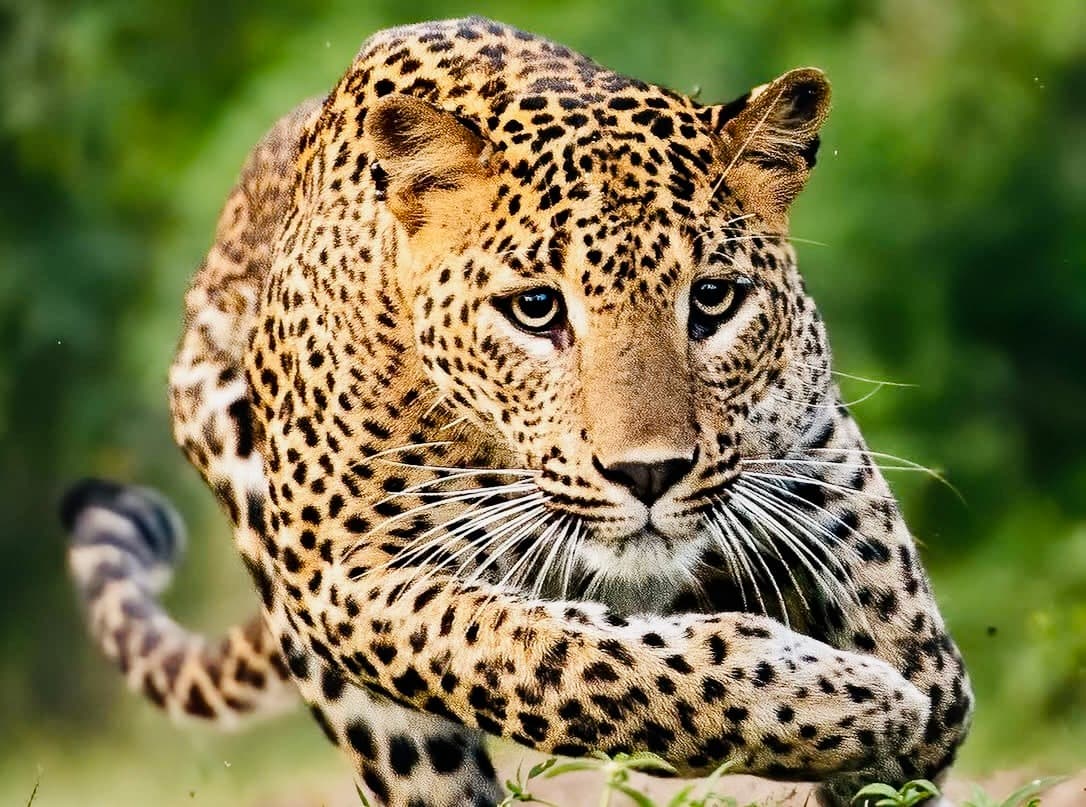
And then your brain assembles the pattern from the texture — the rosette spots that look, for a full second, like dappled shadow until they resolve into fur. A leopard, motionless, watching the jeep from 40 metres. Watching you.
This is the finest version. Three jeeps. Complete silence. An encounter that has been earned through tracking rather than radio-alert following.
Version 2: The Radio Alert.
The radio crackles. Your driver responds in Sinhala. You move — at moderate speed, not the dangerous rushing speed of less ethical operators — to a location 400 metres south. You arrive to find 12 jeeps already positioned.
This is not a bad encounter. It is a different encounter. On a few occasions, many of these gathered in one location to spot an animal — this is the one thing some visitors didn't like during their visit to Yala, but overall, they still had a great experience.
The leopard — a young male, sitting on a granite inselberg — is visible to all 12 jeeps simultaneously. He is entirely relaxed. He has been in this position for 20 minutes. He is not going anywhere. In the time you spend at this sighting, you will watch him yawn (involuntary gasp from every jeep simultaneously), stretch (a full-body arc that seems impossibly fluid), and descend from the rock — walking across open ground directly toward the line of jeeps before turning into the scrub 8 metres away.
This encounter, too, is extraordinary. It is just different.
The finest Yala safari includes both versions across two drives.
6:00 AM — 10:00 AM: The Full Morning Arc
The morning drive is not a single event — it is a narrative with a structure.
Act 1 (6:00 — 7:30 AM): The Tracking Hours. The finest light, the quietest tracks, the highest predator activity. This is when the tracking instinct of a good driver produces its finest results. Leopard probability is at its peak. Sloth bear activity (in season) is highest. Every alarm call is significant.
Act 2 (7:30 — 9:00 AM): The Waterhole Hours. As the sun rises and the temperature climbs, the park's animals begin moving toward water. The waterholes become the defining locations. Elephant herds arrive in single file, calves staying close to mothers. Crocodiles slide from the bank into the shallows. Painted storks wade in formation through the lagoon edge. The light is now gold and horizontal — the finest photography light of the day.
The waterhole scenes that Yala produces in this window — 20 elephants at water, a dominant bull moving deliberately through them, crocodiles watching from the margins, painted storks working the shallows, and the Indian Ocean visible as a blue line through the trees at the park's southern edge — exist nowhere else on Earth with this combination of species in a single frame.
Act 3 (9:00 — 10:00 AM): The Temple and the Coast. Many drivers route through Sithulpawwa rock temple in the final hour of the morning drive — the ancient Buddhist monastery built into a granite outcrop inside the park. A short climb from the jeep track reaches a summit with 360-degree views over the entire park. The peacocks of Sithulpawwa are the most relaxed and photogenic in the park, habituated to the monks rather than jeeps.
The Patanangala beach — where the park's southern boundary meets the Indian Ocean — is worth a brief detour. Wild beach. No tourists. Occasionally, in the dry season, a leopard track pressed into the sand above the high-tide line.
10:00 AM: Exit. The gate closes for the mandatory midday rest period. Your driver has you back at the accommodation by 10:15 or 10:30. Breakfast is waiting.
What People Don't Tell You: The Real Sensory Experience
The guides describe the wildlife. Nobody describes what the Yala safari is actually like as a physical, sensory experience. Here it is:
The smell: The dry-zone scrub has a specific smell that is unlike anything in the natural world outside this ecosystem — warm laterite dust, dried grass, a faint salt suggestion from the Indian Ocean 10 kilometres south, the occasional sweet-decay smell of a waterhole's vegetating edges. By the time you drive back through the gate on the last morning, this smell will be so deeply encoded in your memory that catching it years later — in a dried flower, a museum case, a spice market — will bring the whole morning back with complete immediacy.
The dust: The laterite roads of Yala produce a fine red dust that settles on everything within minutes of the jeep moving — camera lenses, clothing, teeth. Bring wet wipes. Understand that the dust is part of the experience, not an inconvenience to be managed away.
The heat gradient: From the pre-dawn coolness at 6:00 AM to the building warmth at 8:00 AM to the genuinely hot air by 9:30 AM — the temperature transition during a single morning drive is dramatic. The fleece you wore at the gate will be in your bag by 8:00 AM.
The vibration: Yala's tracks are corrugated laterite — a surface that transmits every irregularity directly through the jeep's suspension into your body. After 4 hours, you will feel this in your spine. The beanbag helps with camera stabilisation. Nothing helps with the vibration itself. It is simply part of the terrain.
The silence at a sighting: When the driver cuts the engine and the jeep stops, the silence is absolute in a way that you will not have experienced in any urban or suburban context. No engine noise. No traffic. No human sound. Just the park's ambient sound — birds, insects, the occasional rustle of something moving in the scrub — and your own heartbeat, which becomes audible.
The weight of attention: Four hours of focused wildlife observation is genuinely tiring in a specific way — not physically exhausting but attentionally depleted. The concentration required to watch every edge of every waterhole, to listen for every alarm call, to process every movement at the periphery of vision — this is sustained at high intensity for the full morning. By 10:00 AM, when you exit the park, you will feel a specific post-intensity quiet that is unlike ordinary tiredness. It is closer to the feeling after a long meditation.
After the Drive: What Happens When You Come Back
The guesthouse breakfast that follows a Yala morning drive is consistently described by travellers as one of the finest meals they eat in Sri Lanka — not because of any special preparation (though a good Tissamaharama guesthouse prepares a proper Sri Lankan breakfast with hoppers, dhal, and pol sambol), but because of the specific hunger and relief and exhilaration that the four-hour drive produces.
You will not speak for the first ten minutes. You will sit with your tea and your food and your photographs — which you are already reviewing, already editing in your mind — and process what just happened.
The conversation, when it comes, will be about specific moments. Not "we saw a leopard" — but "did you see when the leopard looked directly at the jeep and then yawned without breaking eye contact?" The specificity of the wildlife encounter memory is striking. People who struggle to recall the details of a dinner party three days ago can describe every movement of a leopard they saw four days earlier in precise, sequential detail.
This is the Yala safari's most enduring characteristic. Sri Lanka national parks safaris provide a once-in-a-lifetime experience of nature, raw and up close — whether on a Yala National Park safari, our knowledgeable tour guides are experts in the local flora and fauna. The wildlife you see is genuinely wild. It made its own choices about where to be this morning. You were present for them. That combination — wildness and presence and the specific light of a dry-season Yala dawn — produces memories that do not fade.
The Afternoon Safari: A Different Experience
Most first-time visitors do the morning safari and consider themselves done. The best Yala visits include both.
The afternoon safari — entry from approximately 2:30 PM, exit by 6:00 PM — is a different experience from the morning, not a lesser one.
The light quality of the late afternoon rivals the morning. The golden hour before sunset, when the sun angles across the scrub and turns everything amber, is arguably the most photogenic window of the day — and it catches the leopards in their second activity peak, moving off the inselbergs as the rocks cool and hunting activity begins.
From the first light of dawn to the golden glow of sunset, every safari in Yala is a unique adventure into Sri Lanka's wild side.
The afternoon is quieter than the morning in terms of jeep traffic — many operators run morning-only drives, so the afternoon session has fewer competing vehicles in the first two hours. The mid-afternoon lull (3:00–4:30 PM) is the quietest period of the entire safari day.
Elephant encounters in the late afternoon are among the finest at Yala — herds of 15–30 animals moving toward evening waterholes in the amber light, calves keeping pace with mothers, the sound of them moving through the scrub carrying 200 metres before they become visible.
The exit at 6:00 PM, through the gate and back toward Tissamaharama, passes through the buffer zone in the last of the day's light. On the best evenings, an elephant or a peacock or a monitor lizard appears on the road edge in the final minutes before darkness — an unexpected last sighting that the morning drive, with its urgency of the gate and the golden hour, cannot duplicate.
When You Don't See a Leopard: The Honest Truth
I didn't spot any leopards myself when I was in Yala (or during any other safari I did), but you might have better luck! After all, if there's one place in Sri Lanka where you might spot these animals, it's Yala National Park.
This is the honest truth that every ethical guide tells and every commercial operator avoids: a Yala safari does not guarantee a leopard. The probability is high — significantly higher than any other location on Earth. But probability is not certainty.
Here is what the Yala safari delivers regardless of whether a leopard appears:
The landscape itself. The combination of monsoon scrub jungle, open golden grasslands, coastal lagoons, ancient temple ruins, and the Indian Ocean shoreline — all within a single drive — is extraordinary even without big cat encounters.
The elephant encounters. Herds of 15–30 Sri Lankan elephants at waterholes, with calves, in good light — this is a world-class wildlife experience that many parks cannot offer even on a good day.
The waterhole theatre. Painted storks, purple herons, spoonbills, great white pelicans, mugger crocodiles, water monitors, and spotted deer — all at a single waterhole simultaneously, in the morning light — is a biodiversity spectacle that has no equivalent in most wildlife destinations.
The sloth bear (in season). A sloth bear climbing a Palu tree in May or June, shaggy and purposeful, is an encounter that experienced wildlife watchers specifically travel to Yala for — and that most visitors leave describing with as much passion as the leopard.
The experience of trying. The tracking. The alarm calls. The binoculars and the patience and the specific silence of waiting for something to happen. This process — the hunt itself, without the kill — has its own value. Safari visitors who understand this leave satisfied regardless of the species list. Those who came only for the leopard and nothing else are the ones who write disappointed reviews.
Come for the leopard. Be prepared to love everything else. Both outcomes leave you with something real.
The Complete "What to Expect" Timeline
Time What's Happening
Night before, 9 PM Charge everything, lay out kit, brief yourself, two alarms set
3:45 AM First alarm. Get up immediately.
4:15 AM Dressed, small snack, camera ready, outside
4:30 AM Jeep arrives. Mount beanbag. Brief driver on preferences.
4:50 AM Driving through Tissamaharama toward Palatupana
5:15 AM At gate. Queue. Watch the night sky while you wait.
5:50 AM At the barrier. Absolute silence from every jeep.
6:00 AM Gate rises. You are moving.
6:00–7:30 AM Peak tracking window. Listen for alarm calls. Watch inselbergs.
7:30–9:00 AM Waterhole hours. Elephants, crocodiles, birds, golden light.
9:00–10:00 AM Sithulpawwa temple, coastal zone, final track circuits.
10:00 AM Exit gate. Midday rest period begins.
10:30 AM Back at guesthouse. Breakfast. Photographs. Processing.
2:30 PM Optional afternoon safari pickup.
2:30–6:00 PM Afternoon drive. Golden hour. Leopards active again. Elephants at dusk.
6:00 PM Exit gate. Drive back through buffer zone in last light.
6:30 PM Back at accommodation.
Optional 7:00 PM Drive to Kataragama for evening puja ceremony.
The Final Word: Why This Morning Will Stay With You
From dense jungles and sprawling grasslands to tranquil lakes, each moment offers a chance to witness nature at its finest — witness the park come alive during golden sunrises or dramatic sunsets, and gain fascinating insights into wildlife behavior, ecosystems, and conservation efforts.
The Yala safari morning is extraordinary not because of what you see — though what you see is genuinely extraordinary. It is extraordinary because of the state it puts you in.
The combination of pre-dawn alertness, physical presence in a wild landscape, the sustained attention of tracking, and the sudden emotional discharge of a major animal encounter produces a specific quality of awareness that is difficult to find in ordinary life. Everything is vivid. Nothing is dull. The spotted deer that would be background noise in a zoo becomes the most carefully observed animal you have ever watched.
This is what people mean when they describe the Yala safari as "life-changing" — which sounds like marketing language until you have done it and understand that what they are describing is not the leopard specifically, but the state of attention the leopard requires. And that state — of complete, undivided, present-tense engagement with the natural world — is one of the rarest and most valuable experiences available to a human being in 2026.
Set the alarm. Mount the beanbag. Brief the driver.
The gate opens at 6:00 AM.
Last updated: May 2026 | All timing, wildlife behaviour information, and safari logistics verified against current 2026 conditions at Yala National Park, Sri Lanka. Wildlife sightings are never guaranteed — the park is a living ecosystem, not a performance.
Ready to see this in real life?
Book your Yala safari today and experience the magic firsthand.
Explore Packages