Sri Lanka Safari vs Africa Which Is Better in 2026? (The Honest Answer From Someone Who's Done Both)
Is Sri Lanka safari better than Africa? The honest, detailed 2026 comparison — leopard probability, costs, crowds, experience quality, and the real answer to the question everyone is searching after watching "4 leopards in one day" at Yala National Park.
The Video That Started a Million Searches
In January 2026, a YouTube video went viral. The title: "4 LEOPARDS IN ONE DAY?! Is a Sri Lankan safari actually better than Africa?"
Within weeks, the video had been watched by hundreds of thousands of people. And every single one of them ended the video doing the same thing — opening Google and searching some version of the same question:
"Is Sri Lanka really better than Africa for a safari?"
This blog is the honest answer. Not from a tourism board. Not from an operator with something to sell. From the evidence — the wildlife data, the cost comparison, the crowd reality, the specific quality of encounter — laid out clearly enough that you can make an actual decision.
The short answer: it depends on what you want. But for a specific category of traveller — and perhaps for you — Sri Lanka in 2026 is not just comparable to an African safari. It is genuinely, measurably superior for the one wildlife experience that drives the comparison: the wild leopard encounter.
Here is why. Here is what the comparison actually looks like. And here is the honest assessment of who should go where.
The Question Behind the Question
When people search "Sri Lanka vs Africa safari," they are usually asking one of four more specific questions:
1. Will I actually see a leopard? (Probability comparison)
2. Is it worth the cost difference? (Value comparison)
3. Is the experience as good? (Quality comparison)
4. Am I missing something by not going to Africa? (Completeness comparison)
This guide answers all four — specifically, with data, and without the marketing optimism that makes every destination sound like the best option.
Part 1: The Leopard Probability — The Most Important Comparison
This is the core of the debate. The leopard is why the comparison exists at all. And on this specific dimension, the data is unambiguous.
Yala National Park, Sri Lanka
Yala National Park holds the highest documented density of wild leopards anywhere on Earth — approximately one individual per square kilometre in prime habitat areas of Block 1. The park's leopard population in Block 1 alone is estimated at 25–90 resident individuals depending on survey methodology.
Sighting probability per drive, dry season (February–June): 60–90%
April and May are particularly rewarding, offering up to a 90% success rate for sightings. Four leopards in one day — the claim of the viral YouTube video — is not an invented headline. It is a documented, repeatedly-achieved outcome during peak dry season with an experienced guide.
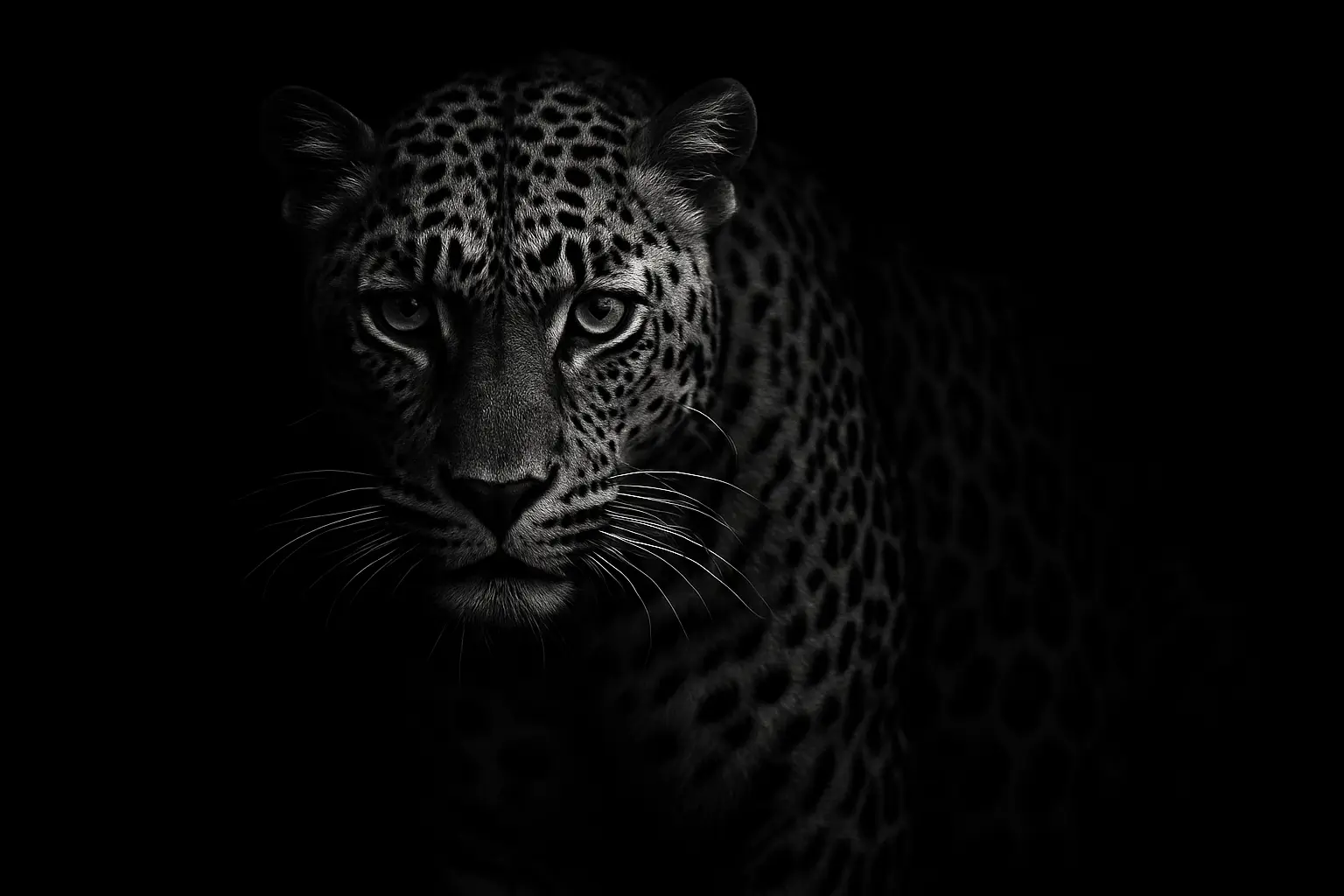
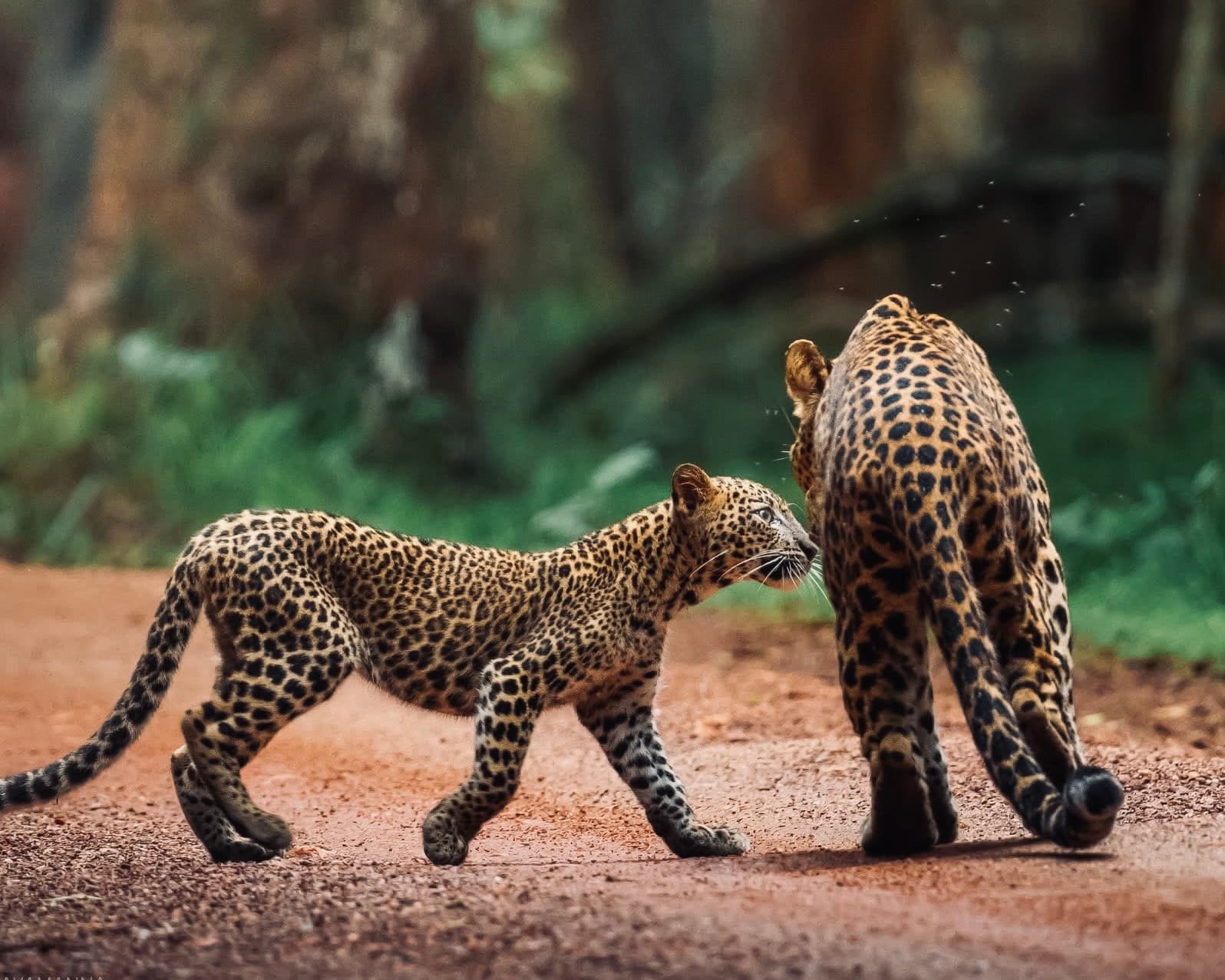
The biological reason for this extraordinary visibility has been discussed across the blog: no tigers, no lions, no hyenas. Yala's leopards are the unchallenged apex predators of an island ecosystem. They have never evolved wariness. They lounge on sun-warmed granite boulders in full daylight, walk tracks at 6:30 AM with imperial indifference, and make prolonged eye contact with your jeep as casually as a domestic cat regards a delivery van.
Africa: The Range of Outcomes
"Africa" is not one destination. The leopard probability varies dramatically across the continent:
South Africa (Kruger National Park): Leopard density in Kruger's leopard-rich zones is estimated at 1 per 12–15 km². Sighting probability per day: 15–30% in the best areas, significantly lower elsewhere.
Kenya (Maasai Mara): Historically excellent leopard habitat. Probability per drive: 20–40% in peak season with a good guide in the right area (Mara Triangle is better than the main reserve). The Mara's leopards share territory with lions and spotted hyenas — they are more secretive and primarily nocturnal as a result.
Tanzania (Serengeti): Similar to the Mara but larger and more dispersed. Probability per drive: 15–25%. Leopard sightings here tend to involve the classic tree-cached kill sighting — an animal visible but inactive at distance.
Botswana (Okavango Delta): The finest leopard quality in Africa — but probability per drive is lower (10–20%). The Okavango's leopards are often watched from specialised photographic vehicles in restricted-access zones with strict vehicle limits. When you find one, the quality of encounter is extraordinary.
The Honest African Leopard Assessment:
Leopards eluded me on my previous four trips to Africa. This is not an unusual experience. It is the experience of experienced, well-equipped, professional safari-goers who have done multiple trips to multiple parks. The African leopard's behaviour — driven by millennia of competition with lions and hyenas — makes it genuinely, fundamentally harder to see than Yala's apex-predator version of the same species.
The probability verdict: Sri Lanka wins decisively and unambiguously.
A visitor with five days at Yala in peak season has a higher probability of multiple leopard sightings than a visitor with five days in almost any African national park. This is not a marketing claim. It is what the density data and sighting reports confirm.
Part 2: The Cost Comparison — What You Actually Pay
This is the comparison that drives most searches from travellers considering both options. And it is the one where Sri Lanka wins most dramatically.
African Safari Cost Reality (2026)
A mid-range Kenya safari (Maasai Mara, 5 nights, tented camp, all-inclusive with game drives):
* International flights (London to Nairobi): USD 800–1,400 return
* 5 nights mid-range tented camp (Mara): USD 350–600 per person per night all-inclusive
* Park fees (Maasai Mara): USD 70–120 per person per day
* Total 5-night Kenya safari: USD 2,500–4,400 per person (excluding international flights)
A luxury Kenya safari (private conservancy access, top-tier camp, specialist guide):
* 5 nights luxury camp: USD 1,000–3,000 per person per night all-inclusive
* Total 5-night luxury Kenya safari: USD 5,200–16,400 per person (excluding flights)
South Africa (Sabi Sand Private Reserve, Kruger ecosystem, 4 nights):
* International flights (London to Johannesburg): USD 700–1,200 return
* 4 nights Sabi Sand all-inclusive: USD 600–900 per person per night
* Total 4-night Sabi Sand safari: USD 2,500–3,800 per person (excluding flights)
Sri Lanka (Yala) Safari Cost Reality (2026)
International flights (London to Colombo): USD 700–1,100 return
The Yala safari component within a broader Sri Lanka trip:
* 2 nights Tissamaharama guesthouse + 2 private safaris: USD 170–250 per person (all-inclusive)
* 2 nights Wild Coast Tented Lodge (luxury, all-inclusive): USD 700–1,200 per person per night
The full Sri Lanka 10-day trip including Yala:
* Budget: USD 800–1,200 per person total (excluding international flights)
* Mid-range: USD 1,400–2,200 per person total (excluding flights)
* Luxury (Wild Coast Tented Lodge 2 nights + rest mid-range): USD 2,500–4,000 per person total
The cost verdict: Sri Lanka wins by a dramatic margin.
A comparable quality of wildlife experience at Yala costs 40–70% less than the equivalent African safari. The savings are so significant that many travellers do both in the same year — or use the cost difference to fund a month-long Sri Lanka experience rather than a week in Africa.
Part 3: The Experience Quality — What the Encounter Actually Feels Like
This is the most nuanced comparison. Cost and probability are measurable. Experience quality involves subjective factors that vary by visitor type.
What Africa Does Better
Scale. There is nothing in Sri Lanka — or anywhere outside Africa — that replicates the visual scale of the Serengeti at dawn, the wildebeest migration crossing the Mara River, or a pride of 12 lions on a fresh kill surrounded by vultures and hyenas. The African savanna's open vastness communicates a sense of the ancient world's unbroken wildness that no other wildlife destination replicates.
The Big Five. Sri Lanka has no lions, no rhinos, no cape buffalo, and no hippos. If the specific combination of the African Big Five is the wildlife goal, Africa is the only option. Yala's own Big Five — leopard, elephant, sloth bear, crocodile, water buffalo — is extraordinary, but the lion and rhino are absent.
The Buffalo and Wildebeest Spectacle. The Maasai Mara's wildebeest migration (July–October) is the largest terrestrial animal migration on Earth. It is uniquely African and genuinely indescribable in scale. Nothing approaches it anywhere else in the world.
The Predator Diversity. Africa's predator guilds — lions, leopards, cheetahs, wild dogs, hyenas — create ecosystem dynamics that Yala cannot replicate. Watching a cheetah hunt or wild dogs bring down an impala is an experience unavailable outside Africa.
The Sky. The African savanna's enormous, cloud-stacked sky — particularly in the Serengeti and the Mara — is a photographic and emotional backdrop with few global equivalents.
What Sri Lanka Does Better
Leopard probability. Already covered, but it cannot be overstated. If seeing a wild leopard in full daylight at close range is the specific goal, Sri Lanka's probability advantage over Africa is so substantial that it changes the calculation entirely for visitors for whom the leopard is the primary target.
Leopard behaviour. Yala's daylight-active, boulder-resting, track-walking leopards display a behavioural richness that Africa's primarily nocturnal, competition-stressed leopards rarely demonstrate in daylight. The encounter at Yala is more extended, more relaxed, and more behaviourally revealing than a typical African leopard sighting.
Landscape variety in a small area. Yala's Block 1 combines dry scrub jungle, open golden grasslands, freshwater lagoons, ancient Buddhist temple ruins, and an Indian Ocean coastline — all within a single morning drive. African parks are typically more ecologically uniform within a single visit.
Cost and accessibility. Discussed. Sri Lanka's dramatically lower cost makes the wildlife experience accessible to travellers for whom Africa's price point is prohibitive.
The complete island experience. A Yala safari does not exist in isolation. It is part of a broader Sri Lanka trip that includes the Cultural Triangle, the Kandy-to-Ella train, whale watching at Mirissa, and the south coast beaches. The diversity of a complete Sri Lanka trip — history, wildlife, mountains, ocean — has no equivalent in a standard single-park African safari.
Sloth bears. No African equivalent. The sloth bear encounter in Yala during the Palu fruit season (May–August) — watching a large, shaggy bear climb an ironwood tree with improbable agility and gorge on fruit with complete indifference to the jeep below — is one of the most charming and unexpected wildlife experiences in Asia. Africa has nothing like it.
The crowd context. While Yala's Block 1 has its own jeep jam problem, it is structurally different from Africa's. At Yala, the overcrowding is at specific sightings for specific animals. The vast majority of a Yala morning drive happens on quiet tracks with 2–5 other vehicles in sight. African parks, particularly the Maasai Mara's main reserve during peak season, can feel equally crowded or more so at major sightings.
Part 4: Who Should Go Where
Go to Sri Lanka (Yala) If:
You specifically want to see a wild leopard. No qualification needed. Sri Lanka offers the highest probability of a wild leopard encounter in the world, at the lowest cost, with the most accessible logistics. If the leopard is your primary goal, Sri Lanka is the rational choice.
You want more than just the wildlife. Sri Lanka's compact geography means a 10-day trip includes wildlife, ancient history, scenic railways, hill country tea estates, and some of the finest beaches in Asia. A 10-day Kenya trip is predominantly the Mara, the Amboseli, and transit.
Budget is a meaningful factor. The cost differential between a comparable Sri Lanka and Africa wildlife trip is 40–70%. This money can be spent on the rest of the Sri Lanka circuit, on a second visit to Yala, or saved entirely.
You've already done Africa. Yala offers something genuinely different from any African park — the island ecosystem apex predator, the sloth bear, the coastal wildlife zone, the ancient temples inside the park. Experienced Africa safari-goers consistently describe Yala as the most surprising and emotionally intense wildlife experience they have had outside Africa.
You want the blue whale combination. Sri Lanka uniquely offers both the world's highest leopard density AND world-class blue whale watching at Mirissa. No African destination offers this specific combination of world-record wildlife experiences in a single trip.
Go to Africa If:
You want the Big Five, specifically. Lions, rhinos, cape buffalo, and hippos are absent from Sri Lanka. If these species are on your wildlife bucket list, Africa is the only option.
You want the wildebeest migration. The Maasai Mara in July–October, during the Mara River crossings, is one of the most spectacular natural events on Earth. It has no equivalent anywhere outside Africa.
Scale is the experience you seek. The African savanna's visual scale — endless horizon, enormous sky, ancient landscape — is something Sri Lanka's more intimate, varied terrain cannot replicate. If the emotional experience of enormous scale is what you want from a safari, Africa delivers and Sri Lanka does not.
Predator diversity matters. Cheetahs, wild dogs, lions, hyenas, leopards — the full African predator guild interacting in one ecosystem is uniquely African. Sri Lanka's predator community, extraordinary in the context of the Sri Lankan Leopard, lacks the diversity of African plains.
You are primarily a bird photographer targeting African endemics. Africa's bird diversity — particularly the southern African endemics, the East African Rift Valley species, and the Congo Basin specialties — is unmatched anywhere in the world for specific African species photography.
Part 5: The Honest Verdict for 2026
The viral YouTube video asked: is Sri Lanka actually better than Africa? The answer is not a single yes or no. It is a framework.
For the leopard specifically: Sri Lanka is better. By every measurable metric — density, sighting probability, encounter duration, behavioural richness, cost per sighting — Yala's Sri Lankan Leopard delivers a superior wild leopard experience to any African destination. This is not subjective. It is what the density data says.
For the complete safari ecosystem: Africa is better. The Big Five, the wildebeest migration, the predator guild dynamics, the savanna scale — these are African exclusives that Sri Lanka cannot replicate or substitute.
For the complete travel experience around the wildlife: Sri Lanka is better. The island's variety — history, railways, hill country, beaches, whales — produces a trip of breadth and surprise that a single-park African safari cannot match.
For value: Sri Lanka wins overwhelmingly. The cost differential is so significant that for budget-conscious travellers, it effectively decides the question before the wildlife considerations begin.
The practical recommendation for most travellers:
If you have never seen a wild leopard and want to, go to Yala. You will see it. You will see it in full daylight, at close range, in a landscape of extraordinary beauty, at a cost that is 40–70% lower than an equivalent African experience.
If you have already been to Yala — or if the African Big Five and the wildebeest migration are specifically on your bucket list — go to Africa.
If your budget allows, do both. Yala first, to guarantee the leopard and experience the island's extraordinary variety. Africa second, for the scale, the predator guild, and the migration. Together, these two destinations define the finest wildlife safari available to any traveller in 2026.
The Numbers That Settle the Debate
Factor Yala, Sri Lanka Africa (Best Equivalent)
Leopard density ~1 per km² (Block 1) ~1 per 12–15 km² (Kruger best zones)
Leopard sighting probability 60–90% per drive (dry season) 15–40% per day (best parks)
Safari cost (5 nights, mid-range) USD 500–900 per person USD 2,500–4,400 per person
Leopard behaviour Daylight active, relaxed, bold Primarily nocturnal, secretive
Big Five available 0/5 (no lion, rhino, buffalo, hippo) 5/5
Other unique species Sloth bear, whale watching nearby Wildebeest migration, cheetah, wild dogs
Landscape variety Jungle, lagoon, beach, temple — 1 drive Savanna dominant, single ecosystem
Crowd management Jeep jams at sightings; avoidable Variable; Mara peak season crowded
International accessibility Major flights via Colombo Major flights via Nairobi/Johannesburg
Complete trip variety Wildlife + history + train + beach + whales Wildlife primary; limited circuit variety
What Four Leopards in One Day Actually Means
Let's close with the viral YouTube video that started a million searches.
Four leopards in one day at Yala National Park. Is this real? Is it repeatable? Or is it a once-in-a-decade outlier used as clickbait?
The honest answer: it is real, it is documented, and while not repeatable on demand, it is also not extraordinary at Yala during peak dry season with a skilled guide using effective tracking methodology.
Block 1's territory structure means that a single morning drive of 4 hours, covering 30–50 km of track at low speed, passes through the territories of multiple individual leopards. A guide who knows which individuals are currently active in which areas — and who combines radio-alert information with independent tracking — can realistically encounter 2–4 individual leopards in a single morning under optimal conditions.
This does not happen every morning. It does not happen on most mornings. But it happens enough times, to enough visitors, that it has become the expectation-setting benchmark that the YouTube algorithm amplified into a viral video.
The more practical expectation: with a good guide, two drives over one overnight stay during the dry season, you will see at least one leopard. With excellent conditions and an exceptional guide, you may see two or three. On rare and extraordinary mornings, four or more is possible.
No other wildlife destination on Earth can make that statement about the wild leopard. That is the answer to the question the video asks.
Sri Lanka, for the leopard specifically, is not just competitive with Africa.
It is the best in the world.
Frequently Asked: The Comparison Questions Everyone Searches
Q: Is Yala better than Kruger for leopards? Yes — significantly. Kruger's leopard density is approximately 1 per 12–15 km² in prime areas. Yala Block 1 is approximately 1 per 1 km². Sighting probability per day at Kruger is 15–25%; at Yala in dry season it is 60–90%. For the leopard specifically, Yala is substantially superior to Kruger.
Q: Is Sri Lanka safari worth it compared to Africa? For most visitors — yes. Sri Lanka delivers the world's most accessible wild leopard encounter at 40–70% lower cost than an equivalent African safari, within a broader trip experience that includes history, hill country, and whale watching. For travellers who specifically want the Big Five or the wildebeest migration, Africa remains the correct choice.
Q: Can you really see 4 leopards in one day at Yala? Yes — it is documented and real, though not guaranteed. Under optimal dry-season conditions with an exceptional guide, encounters with 2–4 individual leopards in a single morning drive are achievable at Yala. This is not possible at any comparable African destination.
Q: Is Sri Lanka cheaper than an African safari? Significantly. A comparable quality 5-night safari experience at Yala costs USD 500–900 per person compared to USD 2,500–4,400 for the African equivalent. The savings are substantial enough to fund a complete Sri Lanka circuit trip (Sigiriya + hill country + Yala + south coast) for less than the cost of the African safari alone.
Q: Should I do Sri Lanka or Africa for my first safari? For a first safari specifically focused on leopard encounters: Sri Lanka. The probability of a meaningful sighting is dramatically higher, the cost is dramatically lower, and the overall trip experience is exceptional. For a first safari focused on the complete Big Five experience: Africa. For most first-time safari-goers who want to actually see a wild leopard: Sri Lanka.
Q: Do you need binoculars for Yala? Yes — strongly recommended. Standard 10×42 binoculars transform the Yala experience, allowing identification of distant animals, detailed observation of behaviour, and appreciation of the park's extensive birdlife. For the leopard specifically, binoculars are often how the first sighting is confirmed — turning a shape on a distant rock into a confirmed rosette pattern.
Last updated: May 2026 | Wildlife density data, cost comparisons, and sighting probability information sourced from published scientific literature, operator reports, and verified visitor accounts from both Sri Lanka and East/Southern Africa.
Ready to see this in real life?
Book your Yala safari today and experience the magic firsthand.
Explore Packages