

How to Avoid Crowds at Yala National Park in 2026 The Insider Secrets That Actually Work
Yala National Park is getting more crowded every year — but 2026's smartest travellers know exactly how to escape the jeep jams and experience the real Yala. Here are the insider secrets that actually work: timing, zones, operators, and tactics no other guide tells you.
The Problem Nobody Warned You About
You booked the Yala safari based on photographs. A leopard, solitary on a granite boulder, golden morning light, the Indian Ocean visible in the distance, and absolute stillness around it. You showed those photographs to your friends. You told them: this is what I'm going to see.
What the photograph did not show was the 47 other jeeps.
Yala faces significant overtourism challenges, with hundreds of jeeps lining up at gates by sunrise and convoys of 30–50 vehicles rushing to single leopard sightings. This "jeep jam" phenomenon causes wildlife stress, habitat damage, and diminished visitor experiences. Studies have documented dangerous "flock behaviour" among drivers who speed down dirt tracks, creating safety hazards and disturbing animal behaviour.
This is the honest reality of Yala National Park in peak season 2026. And it is the fastest-growing traveller frustration in all of Sri Lanka wildlife tourism — not because the wildlife has diminished, but because the crowd management around the wildlife has deteriorated faster than the park's regulatory response.
The good news: if you want a peaceful experience, the answer is to ask your guide to take you to Block 5 — and that is only one of a dozen specific, proven tactics that experienced Yala travellers use to escape the jeep traffic entirely. This guide covers all of them.
Why Yala Gets So Crowded — Understanding the Problem First
To solve a problem, you need to understand its structure. The Yala crowd problem has three distinct layers.
Layer 1: The Gate Bottleneck
All safari vehicles — typically 200–400 on a peak-season day — enter and exit through the same Palatupana Gate on the western boundary of Block 1. The gate opens at 6:00 AM, creating a single-point surge where every jeep that arrives at the same time enters the same zone simultaneously. The first 45 minutes after gate opening produces a brief window of low-traffic driving before the volume builds. By 7:30 AM on a busy day, Block 1's main circuits are congested with vehicles.
Layer 2: The Radio Network Effect
When a leopard is spotted, drivers use radio to alert other jeeps. The speed of this information transfer — and the predictable "flock behaviour" it triggers — means a single leopard sighting can attract 30–50 jeeps within 8–12 minutes. This flock behaviour among drivers who speed down dirt tracks creates safety hazards and disturbs animal behaviour. The leopard that was relaxed before the first jeep arrived becomes stressed before the tenth jeep arrives, and typically retreats before the fortieth jeep arrives — meaning most of those vehicles see only a disappearing tail.
Layer 3: The Block 1 Concentration
Block 1 (Ruhuna/Palatupana) receives the overwhelming majority of all Yala safari traffic because it has the highest documented leopard density. But this concentration is partly self-reinforcing: operators take all visitors to Block 1 because that is where the sightings are; the sightings concentrate in Block 1 partly because that is where the most operators are actively searching. The other four park blocks — which together cover the majority of Yala's area — receive a fraction of the vehicle traffic and produce a fundamentally different safari experience.
The 12 Crowd-Avoidance Tactics That Actually Work
Tactic 1: Be at the Gate at 5:15 AM — Not 6:00 AM
This is the single highest-impact individual action available to any Yala visitor. Early morning safaris starting at 4:30 AM yield the highest success rates since leopards are most active during cooler hours.
The gate opens at 6:00 AM. Most jeeps from Tissamaharama guesthouses depart at around 5:30 AM and arrive at the gate at approximately 5:55–6:05 AM — joining the queue mid-surge. Being at the gate at 5:15 AM means you are among the first 10–15 vehicles through. Those first 10–15 vehicles have a 45-minute head start on 200+ jeeps that arrive later.
In those 45 minutes, Block 1's tracks are quiet. The animals are undisturbed. The alarm-call system works as it should — because only the first few vehicles are present to hear it and respond. The leopard sightings in this pre-crowd window are observed by 2–5 jeeps rather than 50. The encounters are longer, calmer, and closer to the wildlife photography you came for.
What this requires: A hotel pickup at 4:30 AM, which means waking at 4:00 AM. Every Yala visitor who has done this says the same thing: it was completely worth it.
Tactic 2: Target Block 5 (Weheragala / Galge) — The Crowd-Free Alternative
Block 5 (Galge) offers a peaceful experience for those seeking privacy — ask your guide specifically to take you there.
Block 5 is Yala's most underused zone and its fastest-rising search term in 2026. Located in the park's northwestern reaches, accessed via the Galge Gate, Block 5 offers tall ancient forest canopy, river crossings, and elephant encounters — typically shared with 3–8 other jeeps rather than 50+.
Leopard sightings in Block 5 are less frequent than Block 1 but not rare — the animals move between blocks freely, and experienced Block 5 guides who know the specific forest edges where leopards cross between territories produce sightings with notable regularity. What Block 5 cannot guarantee in leopard probability, it consistently delivers in encounter quality: when you do see a big cat in Block 5, you are likely to be watching it with one or two other jeeps rather than 40.
The optimal structure: An early Block 1 drive at gate opening (first through, highest leopard probability in the best light), transitioning to Block 5 for the mid-morning and early afternoon period. This combination delivers both the statistical best chance of a Block 1 leopard encounter AND the atmospheric experience of Block 5 solitude — in a single full-day safari.
Specifically request this route when booking. Many operators default to Block 1 all day because it requires less route planning. A driver who agrees to spend 2–3 hours in Block 5 is an experienced driver who knows the park properly.
Tactic 3: Visit in the Shoulder Season — March, Early June, or November
Peak season at Yala — December through February, and the school holiday weeks of July–August — pushes daily entry to 300–400 jeeps. The shoulder months produce dramatically different conditions.
March: Still dry season (good wildlife), markedly fewer jeeps than February. Leopards remain reliably active at waterholes. The park has a noticeably calmer atmosphere.
Early June: The dry season peak for sloth bears (Palu fruit season) with lower tourist pressure than the February–April peak. Some of the finest wildlife conditions of the year with a fraction of the February crowd volume.
November: The northeast monsoon brings green, atmospheric conditions and the arrival of migratory birds. Leopard sightings are lower probability but the park receives perhaps 20% of its peak-season traffic. For visitors who prioritise atmosphere over maximum sighting probability, November is Yala's finest month.
The visitor data: January to March sees a relatively dry season which is also a popular time to visit — making February the busiest month overall. If you have flexibility in your travel dates, shifting to March or early June delivers meaningfully better crowd conditions without sacrificing wildlife quality.
Tactic 4: Choose Weekdays Over Weekends
This tactic is almost entirely overlooked by international travellers but produces a measurable difference in jeep volumes. Sri Lankan domestic visitors — who form a significant proportion of Yala's total visitor numbers — concentrate their visits on weekends and public holidays. An identical safari on a Wednesday versus a Saturday in the same week will experience different crowd levels.
International travellers often have complete flexibility in their departure and arrival days within a country. The two-hour schedule adjustment that puts your Yala safari on a Tuesday instead of a Saturday may reduce your Block 1 traffic by 20–30%.
Tactic 5: The Afternoon Entry Advantage
Most jeeps enter the park at 6:00 AM and exit by 10:00 AM during the morning session. The afternoon session — entry from approximately 2:00–3:00 PM — typically has lower total vehicle numbers for the first two hours than the morning session.
Leopards are actually a bit more active towards late afternoon — as the rocks that served as daytime resting sites begin to cool, cats move off them and toward hunting positions along forest edges and waterholes. The afternoon safari catches this second golden activity window with somewhat lighter traffic than the morning equivalent.
For travellers who have already done an excellent morning drive and want a quieter second experience: the 2:30 PM entry, when many morning-safari jeeps have already departed and the afternoon surge has not yet fully built, provides 60–90 minutes of comparatively uncrowded park access.
Tactic 6: Request the Quieter Circuit Routes
Within Block 1, not all tracks are equally congested. The main circuits — the routes that pass the most productive waterhole clusters and rocky outcrops — carry the majority of traffic. The secondary circuits and connecting tracks to the coastal zone see a fraction of the vehicle numbers.
An experienced driver who trusts your brief — "I prefer a quieter experience to seeing as many other jeeps as possible" — will route through the secondary circuits, pause at less-used waterholes, and spend more time in the park's coastal zone (where the jungle meets the Indian Ocean and vehicle traffic is minimal). The wildlife here is not inferior to the main circuits; the sighting frequency may be slightly lower, but the encounter quality — when something appears from the coastal scrub — is dramatically better.
State this preference explicitly to your driver before entering the gate. Drivers who hear "I want to avoid jeep jams more than I want to chase radio alerts" understand exactly what to do.
Tactic 7: Stay Inside the Park — DWC Bungalows
The Department of Wildlife Conservation operates bungalows inside Yala National Park itself — specifically Heenwewa and Mahaseelawa. Guests staying at these properties can access the park at any time during the operational hours, including positioning at waterholes and known leopard routes in the minutes before the gate opens to the general public.
The crowd-avoidance advantage of an inside-park stay is structural rather than tactical: you simply have access to the park before, between, and around the general safari sessions. A leopard that visited a particular waterhole at 5:45 AM — before any external jeep reached it — is an encounter exclusively available to inside-park guests.
DWC bungalows are not luxury properties. They are basic, functional government accommodation. But for serious wildlife enthusiasts for whom the crowd issue is a genuine quality-of-experience concern, the inside-park access they provide is worth the compromise in comfort.
Booking: Through the official Department of Wildlife Conservation website. Book months in advance for peak-season dates.
Tactic 8: Choose a Smaller, Independent Operator Over a Large Group Safari
Large group safaris — particularly those operated by major tour companies that run multiple jeeps simultaneously — use shared radio networks and standardised circuits that concentrate vehicles at the same locations at the same times. If your operator is running 12 jeeps on the same morning, all 12 jeeps will respond to the same radio alerts.
Smaller independent operators — single-jeep drivers who have built their reputation on repeat visitors and personal referrals — are more likely to pursue independent tracking strategies rather than following the radio-network crowd. Their incentive is to deliver a unique, high-quality encounter rather than to manage a large group efficiently.
Choose an accommodation with food included as food options for the town are limited — and choose an operator whose safari philosophy you understand before you book, not after you arrive.
Ask your shortlisted operator directly: "Do you follow radio alerts to crowded sightings, or do you use independent tracking?" The answer tells you everything about how your drive will feel.
Tactic 9: The Wilpattu Alternative for Pure Solitude
For travellers who find the Yala crowd reality genuinely incompatible with what they came for, the most powerful crowd-avoidance strategy is to not go to Block 1 at all.
Consider visiting alternative parks like Wilpattu or Gal Oya for more authentic wilderness experiences.
Wilpattu National Park — Sri Lanka's largest national park, in the northwest near Anuradhapura — offers leopard sightings in conditions that Yala Block 1 at peak season simply cannot replicate: no jeep jams, no radio-network flock behaviour, no 50-vehicle convergences. Wilpattu's vast villu (natural lake) landscape concentrates wildlife at predictable locations, and the park receives a fraction of Yala's visitor numbers.
Leopard probability per drive at Wilpattu is lower than Yala Block 1. But the quality of the encounter when it happens — watched by 1–3 vehicles in complete silence, for as long as the animal chooses — is consistently described by experienced Sri Lanka wildlife watchers as superior to the chaotic Yala equivalent.
The honest trade-off: If seeing a leopard is your non-negotiable and you need maximum probability, Yala Block 1 remains the answer. If the quality and atmosphere of the encounter matters as much as the probability, Wilpattu is a serious alternative worth the longer journey from the south coast.
Tactic 10: Book a Full-Day Safari to Reach the Uncrowded Hours
Most jeep traffic in Yala operates on half-day patterns — morning (6:00–10:00 AM) or afternoon (2:30–6:00 PM). The transition period between these sessions — approximately 10:00 AM to 2:30 PM — sees dramatically reduced vehicle numbers as half-day safari jeeps exit and the afternoon session has not yet begun.
Full-day safari guests who remain in the park through this midday transition period access an Yala that very few visitors experience: the park at its quietest, with wildlife concentrated at permanent water sources and minimal competing vehicle presence. The midday heat reduces animal visibility, but the compensation is a park that feels genuinely wilderness-scale again.
The best full-day operators use this midday quiet strategically — positioning at waterholes where crocodile and waterbird activity continues regardless of heat, or exploring Block 5's shaded forest canopy where temperature is lower and wildlife movement continues.
Tactic 11: Brief Your Driver Before the Gate — Not After
The single most underused crowd-management tool available to any Yala visitor is the pre-safari conversation with your driver. Most visitors accept whatever circuit the driver proposes without discussion. The few who brief their driver with specific preferences consistently report better experiences.
What to say before entering the gate:
"I understand that there will be jeep jams at radio-alerted sightings. I prefer to avoid those and instead use independent tracking — listening for alarm calls, watching the animals we find in peace rather than chasing radio alerts. I'm happy to miss a leopard if it means not being in a 40-jeep crowd. Can you drive with that in mind?"
An experienced driver who hears this instruction will track differently, route differently, and respond differently to radio alerts. The brief conversation takes 60 seconds. The improvement to your safari experience can be transformative.
Tactic 12: Consider the Gal Oya National Park Alternative
For the most adventurous crowd-avoiders, Gal Oya National Park offers a completely different experience: boat safaris through elephant territory.
Gal Oya, 2.5 hours northeast of Yala near Ampara, centres on the Senanayake Samudra reservoir — where herds of swimming elephants cross between forested islands in open water. The park sees a tiny fraction of Yala's visitor numbers and offers an experience that no other park in Sri Lanka — or arguably in Asia — can replicate: watching elephants swim between islands from a silent, engine-off boat.
For travellers who have already done Yala and found the crowds too intense, or who are building a second Sri Lanka trip specifically to find quieter wildlife, Gal Oya is the discovery that changes the entire trip.
The Reality Check: When the Crowd Is Worth It
Crowd-avoidance is not always the right goal. This needs to be said honestly.
There are circumstances where the Yala "jeep jam" experience — 50 vehicles around a leopard — is preferable to zero vehicles and no leopard.
If you have one day, one drive, and the leopard is genuinely your non-negotiable bucket-list item, then the radio-network system — with all its chaos and jeep congestion — is your friend. It is the system that most reliably delivers a leopard sighting to first-time visitors with limited time. The driver who chases every radio alert, who positions among the early converging vehicles, who navigates the crowd with practiced efficiency — this driver is serving your specific goal correctly.
The crowd-avoidance strategies in this guide are for a different visitor: the one for whom the quality of the wilderness experience matters as much as the tick on the species list. The one who would rather watch a mongoose for 20 undisturbed minutes than a leopard for 4 minutes through the roofs of 40 jeeps.
Both are valid. Know which one you are before you brief your driver.
The Ethical Dimension: Why Crowd-Avoidance Matters for the Animals
This is the argument that transcends personal preference.
The jeep jam phenomenon causes wildlife stress, habitat damage, and diminished visitor experiences. The behavioural modification documented in Yala's leopard population — animals avoiding previously reliable resting sites, shifting activity to hours with lower vehicle pressure, spending less time in the open — is a direct response to sustained crowd pressure. The crowd is not neutral. It actively degrades the ecological conditions that produce the sightings that the crowd came to see.
By choosing early gate entry, Block 5, shoulder season timing, and independent tracking operators, you are not just improving your personal experience. You are contributing — in a small but measurable way — to the pressure reduction that allows the park's wildlife to maintain natural behaviour patterns.
The leopard that sits on the inselberg for 15 minutes because only 3 jeeps are present rather than 30 is not just a better photograph. It is a less stressed animal. The feedback loop runs in both directions: better visitor behaviour produces better wildlife behaviour produces better visitor experiences.
The Crowd-Avoidance Checklist: What to Do Before, During, and After
Before Your Safari (Book in Advance)
* Book a smaller independent operator with a documented philosophy of independent tracking over radio-alert following
* Confirm a 4:30 AM pickup time — not 5:30 AM or later
* Request Block 5 as part of your route — specifically
* Ask whether the operator can access the Katagamuwa Gate (quieter entry point than Palatupana for specific circuits)
* If dates are flexible, choose a weekday in March, early June, or November
At the Gate (Positioning)
* Arrive by 5:15 AM — aim to be among the first 10 vehicles
* Brief your driver with your crowd-avoidance preference before entering
* Confirm the planned route includes a Block 5 component or the coastal zone circuit
During the Drive (Behaviour)
* When radio alerts come in, ask your driver: "How many jeeps are there? Do we go?"
* At sightings with 10+ jeeps already present, assess whether the encounter quality justifies joining
* Spend extended time at undisturbed waterholes — patience here produces better results than chasing alerts
* Specifically request time in the park's coastal zone — the area where the jungle meets the Indian Ocean receives dramatically less vehicle traffic
After Your Safari
* Report any driver behaviour that violated animal welfare regulations (approaching within 10 metres, off-track driving) to the Department of Wildlife Conservation
* Leave specific, named reviews for guides who practised exemplary crowd ethics — this directly rewards the operators whose behaviour the park needs more of
Frequently Asked: Crowd Questions at Yala
Q: What is the least crowded month to visit Yala National Park? November is the quietest month with the park's most atmospheric conditions — the northeast monsoon brings green vegetation and migratory birds at approximately 20% of peak-season traffic. March and early June are the best shoulder-season months for visitors who also want good leopard conditions with reduced crowds.
Q: What time should I arrive at Yala to avoid jeep jams? Aim to be at the Palatupana Gate by 5:15 AM. This requires a guesthouse pickup at approximately 4:30 AM. The first 10–15 vehicles through the gate at 6:00 AM have a 45-minute head start on the main crowd and access a fundamentally quieter version of Block 1.
Q: Is Block 5 really less crowded than Block 1? Yes — significantly. On a busy Block 1 day with 200+ jeeps, Block 5 typically sees 10–20 vehicles total. The wildlife encounter quality in Block 5 is consistently higher per sighting than crowded Block 1, even though the sighting frequency is lower.
Q: Can I ask my driver to avoid the jeep jams? Yes — and you should. Brief your driver before entering the gate with your preference for independent tracking over radio-alert following. Experienced drivers respond well to this instruction and will route differently as a result.
Q: Is Wilpattu better than Yala for avoiding crowds? For solitude specifically, yes. Wilpattu receives a small fraction of Yala's visitor numbers and offers leopard and elephant encounters in conditions that Yala cannot replicate during peak season. The trade-off is lower leopard sighting probability and a longer journey from the south coast.
Q: Does the jeep traffic bother the leopards? Yes — documented behavioural modification in Yala's leopard population includes avoidance of previously reliable resting sites and activity pattern shifts to lower-traffic periods. This is one of the most significant conservation concerns associated with Yala's tourism growth and a genuine reason to support crowd-reduction practices as an ethical visitor.
The Yala That Still Exists
Beneath the jeep traffic, the radio-network scrambles, and the peak-season crowd dynamics, the Yala that those original photographs captured still exists. It is not gone. It is just harder to find without a strategy.
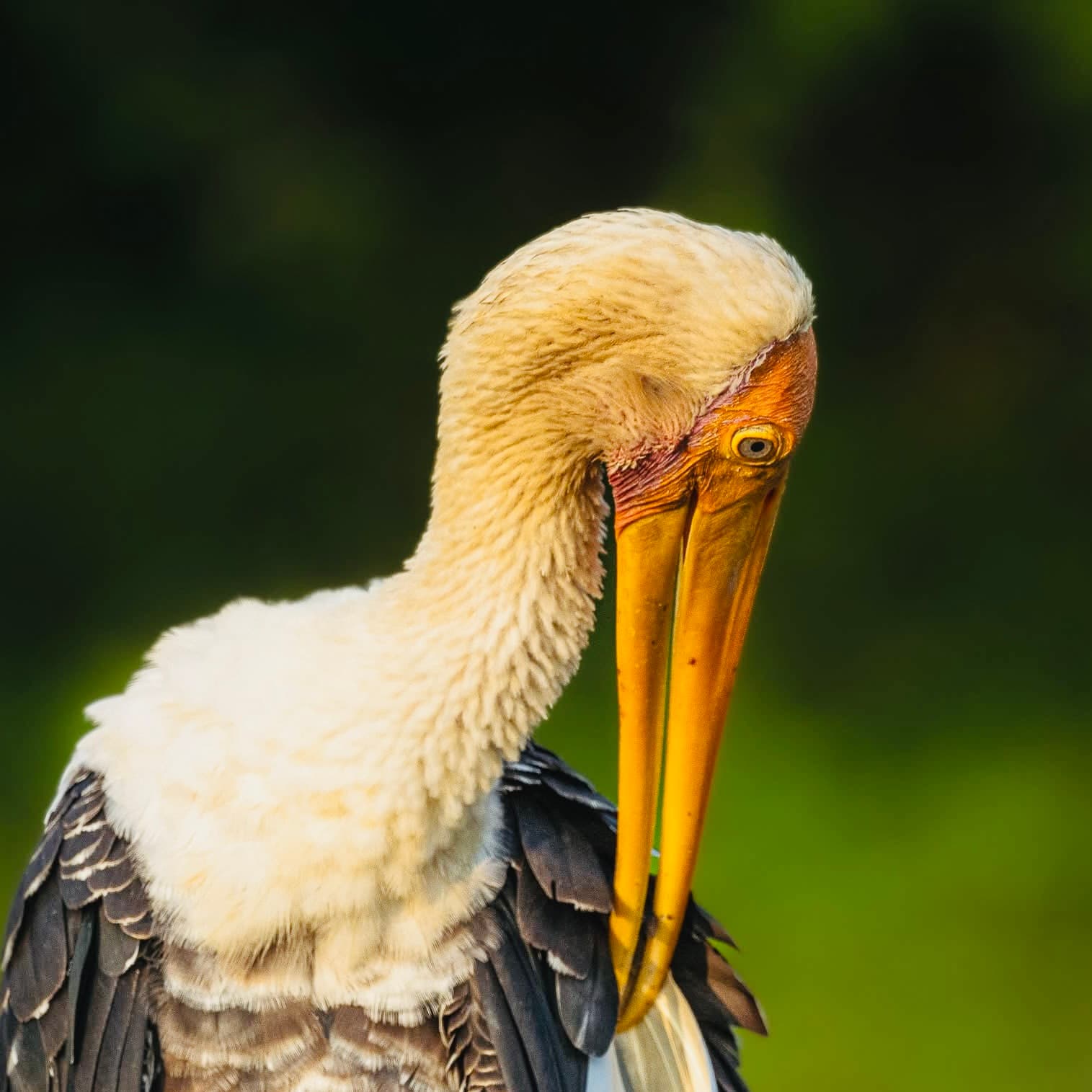
The family of leopards on a granite inselberg at 6:10 AM, watched by three jeeps in complete quiet. The elephant herd crossing the river in Block 5 in late afternoon light with nobody else in sight. The painted storks lifting from a coastal lagoon at sunrise with the Indian Ocean behind them and not another vehicle audible.
These moments are available to visitors who plan deliberately, arrive early, choose their zones intentionally, and brief their drivers honestly. They are not guaranteed — nothing in a national park is guaranteed. But they are genuinely within reach, in 2026, for visitors who know what they are looking for.
This guide is how you find them.
Last updated: May 2026 | Crowd data, zone information, and tactical advice verified against current 2026 visitor reports, operator accounts, and wildlife behaviour research from Yala National Park, Sri Lanka.
Ready to see this in real life?
Book your Yala safari today and experience the magic firsthand.
Explore Packages